


Best Twilio Verify API Alternatives in 2026 | Top OTP & Authentication APIs


Published: Jun 29, 2026

Twilio Verify has long been one of the most widely used APIs for phone verification, SMS OTP, and two-factor authentication. It offers developers a reliable way to verify users through SMS, voice calls, email, and other authentication channels while reducing the complexity of building verification workflows from scratch.
However, as applications grow and authentication volumes increase, many businesses begin evaluating Twilio Verify API alternatives. Some are looking for lower verification costs, while others need better OTP delivery in specific regions, additional verification channels such as WhatsApp, Viber, or Telegram, stronger fraud prevention, or greater control over authentication workflows.
Today, choosing an authentication provider is about much more than sending a six-digit verification code. Modern verification platforms combine multiple communication channels, intelligent fallback routing, phone number intelligence, fraud detection, and developer-friendly APIs to maximize both security and successful user verification.
Whether you're building a SaaS platform, fintech application, eCommerce store, healthcare portal, gaming platform, or customer-facing mobile app, selecting the right verification API directly impacts user experience, account security, login success rates, and operational costs.
In this guide, we'll compare the best Twilio Verify API alternatives in 2026, including their authentication capabilities, supported OTP channels, pricing models, developer experience, global coverage, and ideal use cases. We'll also explain how to choose the right phone verification provider based on your business requirements, whether you're searching for a cheaper Twilio Verify alternative, a multi-channel authentication platform, or an enterprise-grade verification API with global reach.
Why Businesses Look for Twilio Verify API Alternatives in 2026
Twilio Verify remains one of the most recognized user authentication platforms on the market. Its APIs are well documented, it supports multiple verification methods, and it integrates easily with modern applications. For many startups and development teams, it is often one of the first verification services they evaluate.
However, as businesses scale, authentication requirements become more complex. Companies processing thousands or millions of verification requests each month often begin comparing other authentication providers to improve costs, increase OTP delivery rates, expand communication channels, or gain greater flexibility over verification workflows.
Here are the most common reasons businesses evaluate Twilio Verify API alternatives.
1. Reducing Authentication Costs
Verification expenses can grow quickly as user registrations, logins, password resets, and transaction approvals increase. Many organizations look for providers that offer more competitive pricing, volume discounts, or flexible pricing models without compromising delivery reliability.
This is especially important for SaaS companies, fintech platforms, marketplaces, and consumer applications that send large volumes of OTPs every day.
2. Expanding Beyond SMS OTP
SMS remains the most widely used verification channel, but it is no longer the only option.
Many authentication providers now support additional channels including:
Using multiple verification channels allows businesses to improve verification success rates while giving users more flexibility based on their location and communication preferences.
3. Improving OTP Delivery Rates
Fast and reliable OTP delivery directly impacts user experience.
Delayed verification messages can increase signup abandonment, failed login attempts, customer support requests, and lost revenue. Businesses operating globally often compare providers based on regional delivery performance, direct operator connections, intelligent routing, and overall message reliability rather than simply choosing the lowest-priced API.
4. Intelligent Fallback and Verification Reliability
Modern authentication platforms do much more than send a single SMS.
If an OTP isn't delivered within a defined timeframe, advanced verification systems can automatically retry using another channel such as WhatsApp, voice, Viber, or email. This multi-channel fallback approach helps maintain high verification success rates while reducing friction for legitimate users.
For many businesses, automated fallback has become a core requirement rather than an optional feature.
5. Better Fraud Protection
Authentication is also a security challenge.
Organizations increasingly look for verification providers that include features such as phone number lookup, fraud detection, rate limiting, retry controls, geographic restrictions, bot protection, and risk-based authentication to reduce OTP abuse and account takeover attempts.
These capabilities are particularly valuable for financial services, online marketplaces, healthcare platforms, and gaming applications where user trust and account security are critical.
6. Global Coverage and Regional Performance
A provider that performs well in one country may not deliver the same results elsewhere.
Businesses serving customers across North America, Europe, the Middle East, Asia-Pacific, or Latin America often evaluate providers based on local carrier relationships, direct network connectivity, regional routing, and historical delivery performance.
Choosing a provider with strong regional coverage can significantly improve OTP delivery speed and verification success.
7. Developer Experience and Faster Integration
Implementation speed matters.
Developers increasingly prefer authentication platforms that provide REST APIs, SDKs for popular programming languages, clear documentation, webhook support, testing environments, and dashboards for monitoring verification performance.
A strong developer experience reduces implementation time and simplifies ongoing maintenance.
8. Future-Proof Authentication
Authentication continues to evolve beyond SMS.
Many businesses are preparing for broader adoption of passkeys, passwordless authentication, and risk-based verification while continuing to rely on SMS and messaging channels during the transition. Choosing a provider that continues investing in authentication technologies helps organizations adapt without rebuilding their entire verification infrastructure.
Key Factors to Consider When Comparing Twilio Verify API Alternatives
Since many authentication providers offer similar core features, it’s important to focus on what truly differentiates them. Instead of repeating basic capabilities, this section highlights the factors that can significantly impact performance, cost, and long-term scalability.
Multi-Channel Flexibility
While SMS OTP is widely used, relying on a single channel can limit delivery success. Providers that support multiple verification methods allow you to adapt to user preferences and regional availability.
Common supported channels include:
- SMS OTP
- Voice OTP
- WhatsApp OTP
- Viber OTP
- Telegram OTP
- Email OTP
- Flash Call verification
Using multiple channels ensures higher delivery rates and a smoother user experience.
Delivery Performance and Coverage
Reliable message delivery is critical for authentication success. Rather than focusing only on global reach, prioritize providers with strong regional performance and direct operator connections.
Key considerations:
- Delivery speed
- Message reliability
- Intelligent routing
- Coverage in your target markets
Strong regional infrastructure often matters more than broad but inconsistent global coverage.
Automated Fallback Mechanisms
Failed OTP delivery can lead to user drop-off. Advanced providers reduce this risk by automatically switching to alternative channels when needed.
For example:
SMS → WhatsApp → Voice → Email
This seamless fallback process improves verification completion rates without requiring user intervention.
Built-In Security Features
Beyond sending OTPs, modern authentication platforms should actively protect against fraud and abuse.
Important capabilities include:
- Phone number validation
- Fraud detection systems
- Rate limiting
- Retry controls
- Geographic restrictions
- Bot protection
- SIM swap detection
- Risk-based authentication
These features help prevent common threats such as SMS pumping, fake accounts, and account takeovers.
Ease of Integration
A smooth developer experience can significantly reduce implementation time and maintenance effort.
Look for:
- Well-documented REST APIs
- SDKs for popular languages
- Code samples
- Sandbox environments
- Webhooks
- Reliable API performance
- Intuitive dashboards
Efficient integration allows teams to deploy authentication features faster and with fewer issues.
Cost Structure
Pricing models vary widely, so it’s important to evaluate the full cost rather than just per-message rates.
Consider:
- Platform or subscription fees
- Per-verification costs
- Regional pricing differences
- Costs for WhatsApp or voice channels
- Volume discounts
- Included features
- Overage charges
A clear understanding of pricing helps avoid unexpected expenses as usage grows.
Growth Readiness
Your authentication provider should scale alongside your business without requiring major changes.
Evaluate whether the platform supports:
- High verification volumes
- Global expansion
- Traffic spikes
- Multi-region deployments
- High uptime guarantees
- Enterprise-level SLAs
Choosing a scalable solution reduces the need for future migrations.
Compliance and Data Protection
Handling user authentication requires strong security and regulatory compliance.
Depending on your industry, look for providers that meet standards such as:
- GDPR
- ISO 27001
- SOC 2
- HIPAA (if applicable)
Robust compliance practices help protect user data and simplify regulatory requirements.
Which Twilio Verify API Alternative Is Best for Your Use Case?
| If you need | Consider |
|---|---|
| Lowest authentication costs | Dexatel, Prelude |
| Enterprise communications | Infobip |
| Strong European coverage | Verigator by Messente |
| Existing Vonage ecosystem | Vonage |
| Developer-first API | Prelude |
| Multi-channel OTP with intelligent fallback | Dexatel |
| WhatsApp + Viber + Telegram verification | Dexatel |
| Fintech authentication | Dexatel, Infobip |
| Startup MVP | Prelude |
| Global enterprise deployments | Infobip |
The Best Twilio Verify API Alternatives in 2026
There is no single authentication provider that's the best fit for every business. The right choice depends on factors such as your verification volume, target markets, preferred communication channels, security requirements, and budget.
Some providers focus on enterprise-scale communications, while others prioritize developer experience, transparent pricing, or multi-channel authentication with intelligent fallback.
The following Twilio Verify API alternatives were selected based on their authentication capabilities, global coverage, developer tools, pricing transparency, security features, customer reputation, and ability to support modern verification workflows.
Whether you're building a SaaS platform, fintech application, eCommerce business, healthcare solution, gaming platform, or marketplace, these providers offer reliable alternatives for phone verification, user authentication, and OTP delivery.
In no particular order, here are the best Twilio Verify API alternatives to consider in 2026.
1. Dexatel
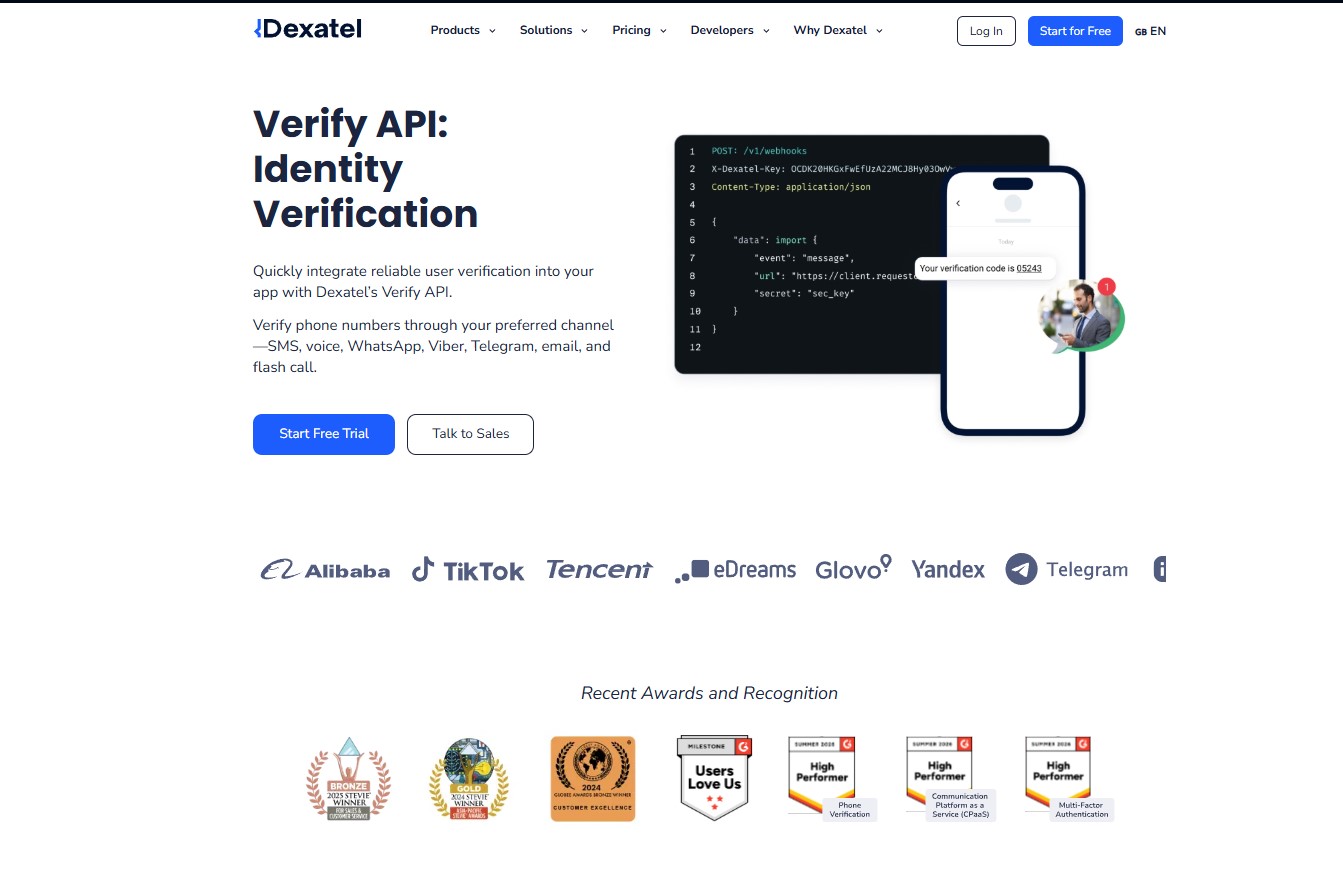
Best for: Businesses looking for a modern, multi-channel authentication platform with transparent pricing, intelligent fallback, and global OTP delivery.
Dexatel Verify is an API-first authentication platform designed to help businesses verify users quickly and securely across multiple communication channels. Instead of relying solely on SMS, businesses can build verification workflows that automatically switch between supported messaging channels such as SMS, WhatsApp, Viber, Telegram, or Email to maximize OTP delivery rates and reduce failed authentication attempts.
The platform is particularly well suited for SaaS companies, fintech, eCommerce, healthcare, logistics, marketplaces, and gaming platforms that need reliable verification at scale without building complex authentication infrastructure internally.
Key Authentication Features
SMS OTP verification
Voice OTP
WhatsApp OTP
Viber OTP
Telegram OTP
Email OTP
Intelligent multi-channel fallback
Verification API
Phone Number Lookup
Fraud prevention tools
REST API and SDKs
Real-time analytics
Global messaging infrastructure
Why Businesses Choose Dexatel Over Twilio Verify
One of Dexatel's biggest differentiators is its channel flexibility. While many verification providers primarily focus on SMS, Dexatel allows businesses to combine multiple authentication channels within a single verification workflow. If the first OTP attempt is not delivered, the platform can automatically retry through another supported messaging channel based on the configured verification flow.
Another advantage is pricing transparency. Businesses with growing authentication volumes often prefer predictable pricing models and flexible routing options to optimize verification costs across different countries.
For organizations operating internationally, Dexatel's direct operator connections and intelligent routing help improve OTP delivery performance while reducing verification failures caused by regional carrier issues.
Developers also benefit from modern APIs, comprehensive documentation, SDKs, and an intuitive dashboard that simplifies integration and ongoing management.
Pros
Supports multiple OTP channels from a single API
Intelligent fallback improves verification success rates
Transparent pricing with volume discounts
Global messaging infrastructure
Phone Number Lookup for additional security
Developer-friendly REST API and documentation
Suitable for startups and enterprises alike
Considerations
Some advanced enterprise workflows may require consultation during onboarding.
Brand recognition is still growing compared to long-established CPaaS providers.
G2 Rating: ★★★★★ 4.9/5
Ideal for: Businesses looking for a scalable authentication platform that combines SMS, WhatsApp, Viber, Telegram, voice, and email verification within a single API while maintaining strong delivery performance and predictable pricing.
2. Infobip
Best for: Large enterprises that need a globally established authentication platform with extensive communication channels and enterprise-grade infrastructure.
Infobip is one of the world's largest CPaaS providers, offering a comprehensive authentication platform alongside messaging, voice, email, and customer engagement solutions. Its authentication products are designed for organizations that require high availability, global scalability, and advanced verification capabilities across multiple regions.
With connections to hundreds of mobile network operators worldwide and a broad portfolio of communication channels, Infobip is frequently chosen by banks, financial institutions, telecommunications providers, retailers, and global enterprises managing millions of user verifications each month.
Key Authentication Features
SMS OTP verification
Voice OTP
WhatsApp authentication
Email OTP
Silent Mobile Verification
Number Lookup
Fraud prevention tools
Multi-factor authentication
Intelligent routing
REST APIs and SDKs
Global messaging infrastructure
Enterprise analytics and reporting
Why Businesses Choose Infobip Over Twilio Verify API
Organizations often choose Infobip because of its global infrastructure and enterprise communications expertise. Companies operating across multiple continents benefit from extensive carrier relationships, strong regional coverage, and high message throughput.
Infobip also offers a broader customer engagement ecosystem beyond authentication. Businesses that want to combine user verification with messaging campaigns, contact center solutions, conversational AI, or omnichannel customer communication may prefer managing everything within a single platform.
For highly regulated industries such as banking and financial services, Infobip's enterprise capabilities, security features, and worldwide presence make it a common choice for mission-critical authentication workflows.
Pros
Extensive global messaging infrastructure
Excellent enterprise scalability
Strong carrier connectivity
Supports multiple authentication methods
Broad CPaaS ecosystem beyond verification
Mature APIs and documentation
Trusted by large international organizations
Considerations
Pricing may be less predictable for smaller businesses or startups.
The platform offers a wide range of products, which can result in a steeper learning curve if you only need authentication.
G2 Rating: ★★★★☆ 4.3/5
Ideal for: Enterprises looking for a mature authentication platform with global coverage, advanced security features, and a complete customer communications ecosystem.
3. Verigator by Messente
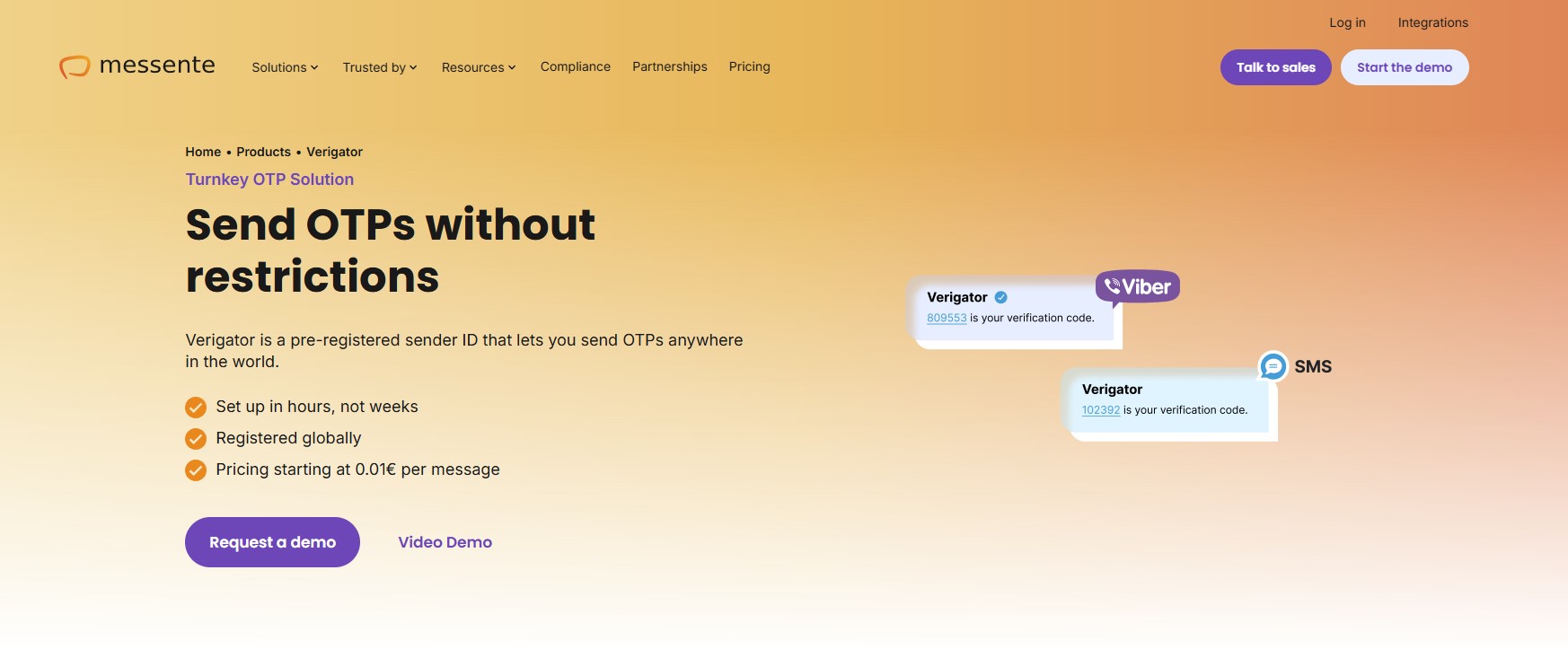
Best for: Businesses looking for a dedicated verification platform with strong European coverage, simple integration, and reliable OTP delivery.
Verigator is Messente's authentication solution built specifically for secure user verification. Rather than being part of a large customer engagement suite, Verigator focuses on helping businesses authenticate users efficiently through multiple verification methods while reducing fraud and improving OTP delivery success.
The platform is designed for companies that want a straightforward authentication API without the complexity of a broader CPaaS ecosystem. Its strong carrier relationships and regional expertise make it particularly attractive for businesses serving customers across Europe.
Key Authentication Features
SMS OTP verification
Voice OTP
WhatsApp verification
Silent verification
Flash Call verification
Phone Number Lookup
Fraud prevention
REST API
SDKs
Verification analytics
Intelligent routing
Global coverage with strong European performance
Why Businesses Choose Verigator Over Twilio Verify API
Businesses evaluating Twilio Verify alternatives often choose Verigator because it delivers a focused authentication experience rather than an all-in-one communications platform.
Its verification API is designed to simplify user authentication while offering multiple verification methods, allowing businesses to improve login success rates and reduce failed verification attempts. Support for Silent Verification and Flash Call verification also gives organizations additional options for reducing SMS costs where these methods are available.
For companies operating primarily in Europe, Verigator's regional carrier relationships and delivery performance are key advantages. The platform also offers a clean API, straightforward documentation, and an implementation process that appeals to lean development teams.
Pros
Authentication-focused platform
Strong delivery performance across Europe
Supports Silent Verification and Flash Call
Easy-to-integrate REST API
Clean developer experience
Reliable OTP delivery
Good balance between simplicity and functionality
Considerations
Fewer customer engagement features than full CPaaS platforms.
Less suited for organizations looking to consolidate messaging, marketing, and authentication into a single vendor.
G2 Rating: ★★★★★ 4.8/5
Ideal for: SaaS companies, fintech startups, marketplaces, and digital platforms that need reliable user verification with strong European delivery performance and a developer-friendly authentication API.
4. Prelude

Best for: Engineering teams and fast-growing businesses looking for a modern authentication platform with intelligent routing, cost optimization, and a developer-first experience.
Prelude is a newer authentication platform built specifically for modern user verification. Instead of focusing on becoming a full customer communications suite, Prelude helps businesses improve authentication performance by intelligently routing verification requests across multiple providers, increasing OTP delivery success while reducing costs.
Its API-first approach, clean documentation, and flexible verification infrastructure make it an attractive option for startups, SaaS companies, fintech platforms, and product teams that want greater control over how authentication is delivered.
Key Authentication Features
SMS OTP verification
Voice OTP
Multi-provider routing
Intelligent failover
Verification orchestration
REST API
Webhooks
SDKs
Verification analytics
Real-time routing optimization
Developer-friendly dashboard
Why Businesses Choose Prelude Over Twilio Verify API
One of Prelude's biggest advantages is its routing intelligence. Instead of relying on a single messaging provider, businesses can optimize authentication traffic across multiple carriers or providers based on cost, delivery performance, or regional availability.
This approach helps improve OTP delivery rates while reducing authentication costs, particularly for companies operating across multiple countries or sending high verification volumes.
Prelude also appeals to engineering teams that want greater flexibility over authentication workflows. Rather than using a fixed verification service, developers can build customized routing strategies that adapt to different markets, user segments, or communication channels.
For organizations focused on performance optimization and infrastructure efficiency, Prelude offers an alternative to traditional verification platforms by giving businesses more control over how authentication requests are processed.
Pros
Modern API-first architecture
Intelligent routing across providers
Cost optimization for high-volume authentication
Strong developer experience
Flexible verification workflows
Fast implementation
Great for engineering-driven organizations
Considerations
Smaller ecosystem than long-established CPaaS providers.
Businesses looking for a complete omnichannel messaging platform may require additional communication services.
Ideal for: Startups, SaaS companies, fintech platforms, and engineering teams that want to optimize authentication performance, reduce verification costs, and maintain greater control over their verification infrastructure.
5. Vonage
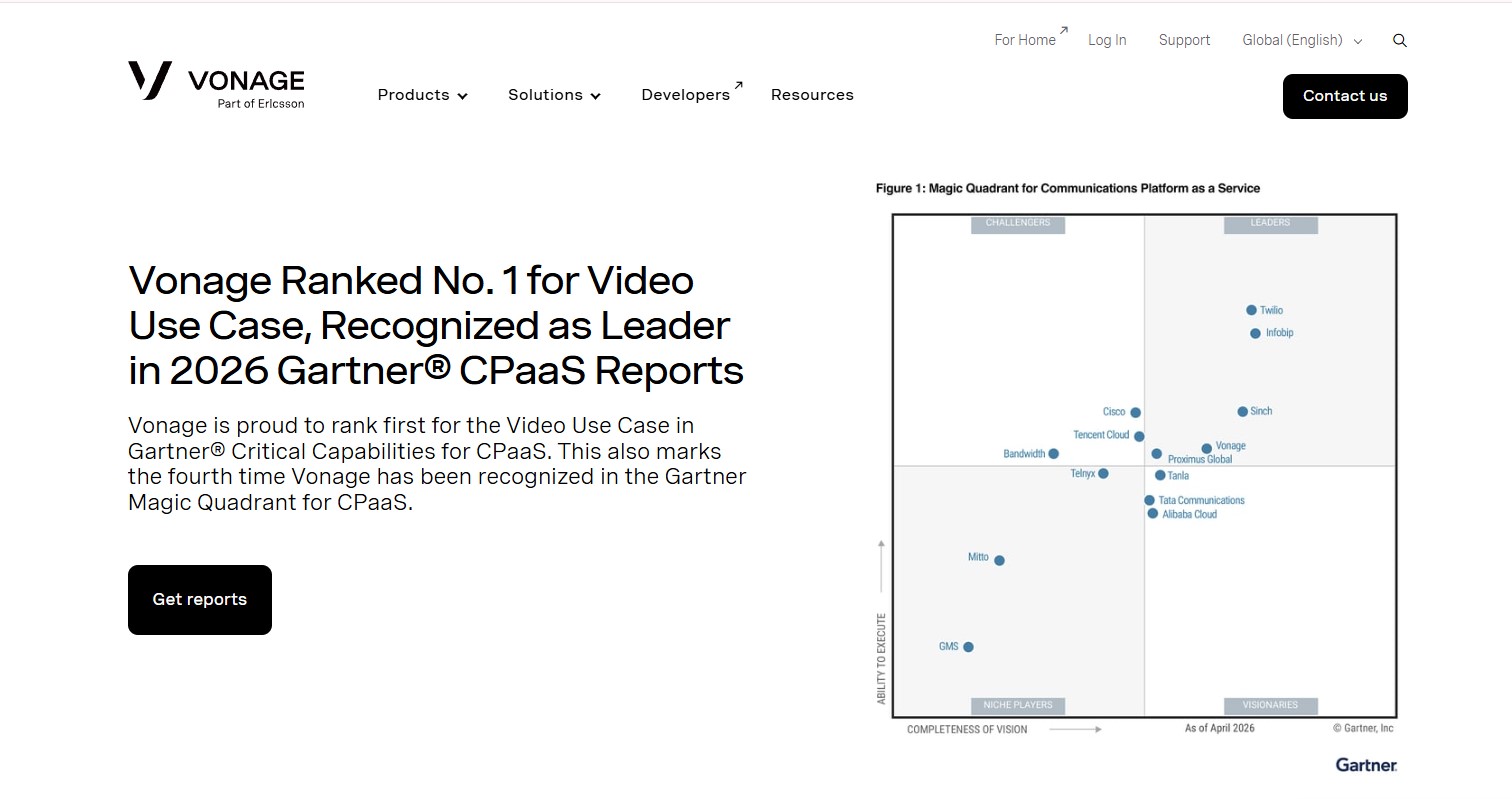
Best for: Businesses looking for a mature communications platform with enterprise-grade APIs and reliable global authentication services.
Vonage is one of the most established names in the CPaaS market, offering a broad portfolio of communication APIs that includes messaging, voice, video, and user verification. Its Verify API enables businesses to authenticate users through multiple verification methods while benefiting from Vonage's global communications infrastructure.
Organizations already using Vonage for SMS, Voice API, or other communication services often choose Verify to keep authentication within a single platform, simplifying integration and vendor management.
Key Authentication Features
SMS OTP verification
Voice OTP
WhatsApp verification
Silent Authentication
Email verification
Automatic fallback workflows
Number Insight API
Fraud detection features
REST API
SDKs
Verification analytics
Global carrier connectivity
Why Businesses Choose Vonage Over Twilio Verify API
Many businesses compare Vonage Verify and Twilio Verify because both are mature authentication platforms with global reach and strong developer ecosystems.
Vonage is often selected by organizations that value long-term platform stability, enterprise support, and the ability to combine authentication with messaging, voice, and video APIs from a single provider. Its verification services also integrate well with the broader Vonage Communications Platform, making it a practical choice for businesses already invested in the ecosystem.
For enterprises operating internationally, Vonage offers reliable global infrastructure, extensive carrier relationships, and flexible verification workflows designed to support secure user authentication at scale.
Pros
Well-established global CPaaS platform
Reliable authentication infrastructure
Supports multiple verification methods
Strong developer documentation and SDKs
Enterprise-grade reliability
Broad communications ecosystem
Trusted by global businesses
Considerations
Pricing may be higher than some newer authentication-focused providers.
Some advanced capabilities are most valuable when using multiple Vonage products together.
G2 Rating: ★★★★☆ 4.5/5
Ideal for: Enterprises and growing businesses that want reliable user authentication while consolidating messaging, voice, and verification services within a mature communications platform.
6. Telesign
Best for: Organizations that prioritize fraud prevention, digital identity verification, and risk-based authentication alongside global OTP delivery.
Telesign is an enterprise authentication and digital identity platform that combines user verification with advanced phone intelligence and fraud prevention capabilities. In addition to delivering one-time passwords through multiple communication channels, the platform helps businesses assess the trustworthiness of phone numbers and user identities before granting access to accounts or approving sensitive transactions.
This combination of authentication and risk intelligence makes Telesign a popular choice for financial institutions, digital marketplaces, social platforms, and organizations that need stronger protection against account takeover, fake registrations, and identity fraud.
Key Authentication Features
SMS OTP verification
Voice OTP
WhatsApp verification
Silent verification
Phone Number Intelligence
Phone ID and reputation scoring
SIM swap detection
Fraud prevention tools
Risk scoring
REST API
Global carrier connectivity
Verification analytics
Why Businesses Choose Telesign Over Twilio Verify API
Businesses evaluating authentication providers often select Telesign because it goes beyond delivering verification codes. Its platform provides valuable insights into phone numbers and user identities, allowing organizations to detect suspicious activity before authentication takes place.
Features such as phone intelligence, SIM swap detection, reputation scoring, and fraud signals help security teams make more informed authentication decisions while reducing account fraud and verification abuse.
For businesses operating in high-risk industries such as fintech, cryptocurrency, online marketplaces, gaming, and digital services, these additional security capabilities can significantly strengthen account protection without adding unnecessary friction for legitimate users.
Pros
Strong digital identity and fraud prevention capabilities
Advanced phone intelligence features
Supports multiple authentication methods
Enterprise-grade global infrastructure
Ideal for high-risk industries
Comprehensive developer APIs
Trusted by large global organizations
Considerations
Better suited for organizations with advanced security requirements than for simple OTP use cases.
Pricing and feature complexity may exceed the needs of smaller businesses or early-stage startups.
G2 Rating: ★★★★☆ 4.3/5
Ideal for: Financial services, marketplaces, social platforms, gaming companies, and enterprises that need user verification combined with advanced fraud prevention, phone intelligence, and risk-based authentication.
7. AWS End User Messaging
Best for: Organizations already building on AWS that want to integrate messaging capabilities into their existing cloud infrastructure.
AWS End User Messaging is Amazon Web Services' messaging service for sending SMS, voice messages, and push notifications at scale. While it can be used to build OTP and phone verification workflows, it is not a dedicated authentication platform like Twilio Verify or several of the providers in this comparison.
Instead, AWS provides the building blocks that developers can use to create custom authentication systems alongside other AWS services such as Amazon Cognito, Lambda, API Gateway, and CloudWatch.
Key Authentication Features
SMS messaging
Voice messaging
Global message delivery
Integration with Amazon Cognito
AWS Identity and Access Management (IAM)
CloudWatch monitoring
REST APIs and SDKs
High scalability
Regional infrastructure
Security and compliance controls
Why Businesses Choose AWS End User Messaging Over Twilio Verify API
Organizations already using AWS often prefer to keep authentication infrastructure within the same cloud ecosystem. By combining AWS messaging services with Amazon Cognito and serverless components, developers can build highly customized verification workflows tailored to their applications.
AWS also offers virtually unlimited scalability, making it a practical choice for businesses handling very high authentication volumes or operating large cloud-native applications.
However, this flexibility comes with additional development effort. Unlike dedicated verification platforms, AWS does not provide built-in authentication features such as intelligent fallback, verification orchestration, retry logic, fraud prevention workflows, or out-of-the-box multi-channel OTP journeys. These capabilities typically need to be designed and maintained by the development team.
Pros
Deep integration with the AWS ecosystem
Highly scalable cloud infrastructure
Flexible architecture for custom authentication
Strong security and compliance capabilities
Familiar environment for AWS development teams
Global infrastructure
Considerations
Requires significantly more development than dedicated authentication platforms.
Many verification features must be built and maintained internally.
Not ideal for teams looking for a turnkey verification API.
G2 Rating: AWS End User Messaging does not have a standalone G2 profile as a dedicated authentication or verification product. Instead, it is typically evaluated as part of the broader AWS ecosystem, including services like Amazon SNS and Amazon Cognito. Reviews for these services highlight strong scalability and reliability, but also note the complexity and development effort required to build complete authentication workflows.
Ideal for: Engineering teams already invested in AWS that want complete control over authentication workflows and have the resources to build and maintain custom verification infrastructure.
Which Twilio Verify API Alternative Is Right for You?
The best Twilio Verify alternative depends on your business goals, authentication requirements, and growth plans. While every provider in this comparison supports OTP verification, each one is designed for different use cases.
Here's a quick guide to help you choose the right platform.
Choose Dexatel if you...
Need SMS, WhatsApp, Viber, Telegram, voice, and email OTP from a single API
Want intelligent multi-channel fallback to maximize verification success
Value transparent pricing and predictable authentication costs
Need global OTP delivery with strong regional performance
Want a developer-friendly authentication platform that scales with your business
Choose Infobip if you...
Operate a large global enterprise
Want authentication alongside a complete CPaaS ecosystem
Need enterprise-grade infrastructure and worldwide carrier connectivity
Require high-volume authentication across multiple regions
Choose Verigator by Messente if you...
Primarily serve customers across Europe
Want a dedicated verification platform without unnecessary complexity
Need reliable OTP delivery with simple API integration
Value a streamlined developer experience
Choose Prelude if you...
Want to optimize authentication costs through intelligent routing
Need greater control over verification infrastructure
Have an engineering team managing authentication workflows
Prefer a modern API-first platform
Choose Vonage if you...
Already use the Vonage Communications Platform
Want authentication integrated with messaging, voice, and video APIs
Need enterprise-grade communications infrastructure
Prefer working with a mature CPaaS provider
Choose Telesign if you...
Prioritize fraud prevention and digital identity verification
Need phone intelligence and risk scoring
Operate in fintech, marketplaces, gaming, or other high-risk industries
Want authentication combined with advanced security insights
Choose AWS End User Messaging if you...
Already build and operate applications on AWS
Want full control over authentication architecture
Have engineering resources to build custom verification workflows
Prefer cloud-native infrastructure over turnkey authentication platforms
Ultimately, the best authentication platform is the one that aligns with your technical requirements, security needs, geographic coverage, and expected verification volume. Before making a decision, evaluate each provider based on supported authentication channels, delivery performance, developer experience, pricing transparency, scalability, and long-term flexibility.
Frequently Asked Questions About Twilio Verify Alternatives
What is the best Twilio Verify API alternative?
The best Twilio Verify API alternative depends on your requirements. If you need a multi-channel authentication platform with SMS, WhatsApp, Viber, Telegram, voice, and email OTP, providers like Dexatel offer a flexible solution. Large enterprises often consider Infobip or Vonage, while developer-focused teams may prefer Prelude. Businesses that prioritize fraud prevention may find Telesign to be a better fit.
Why do businesses switch from Twilio Verify API?
Organizations typically evaluate alternatives to reduce authentication costs, improve OTP delivery rates, gain access to additional verification channels, strengthen fraud prevention, or find a platform that better supports their regional markets and long-term growth.
Is there a cheaper alternative to Twilio Verify API?
Several authentication providers offer competitive pricing models, especially for businesses with high verification volumes. The total cost depends on factors such as destination countries, verification channels, monthly traffic, and pricing structure. Comparing the overall cost of ownership rather than just SMS rates provides a more accurate picture.
Which Twilio Verify API alternative supports the most authentication channels?
Some providers support verification through SMS, voice, WhatsApp, Viber, Telegram, Flash Call, and email from a single API. Multi-channel authentication allows businesses to improve delivery success by automatically switching to another channel if the primary method fails.
Which authentication API is best for startups?
Startups often prioritize fast integration, transparent pricing, and developer-friendly APIs. Platforms with modern documentation, flexible pricing, and simple implementation are typically the best choice during the early stages of growth.
Which authentication provider is best for fintech?
Fintech companies generally require more than basic OTP delivery. Features such as fraud prevention, phone number intelligence, intelligent fallback, high delivery reliability, and compliance are often critical when selecting an authentication provider.
Which authentication platform is best for global applications?
Businesses with international users should look for providers with strong carrier relationships, regional routing, direct operator connections, and proven delivery performance in their target markets. Global infrastructure helps improve verification speed and reduce failed authentication attempts.
Can I migrate from Twilio Verify to another authentication provider?
Yes. Most modern authentication providers offer REST APIs and SDKs that simplify migration. The amount of development work depends on how tightly your application is integrated with Twilio Verify API and whether you plan to introduce new authentication channels or workflows during the migration.
What should I look for when choosing an OTP provider?
Key evaluation criteria include supported verification channels, delivery performance, intelligent fallback, fraud prevention features, pricing transparency, API quality, scalability, compliance, and customer support. The best provider is the one that aligns with both your current requirements and future growth plans.
Is SMS still the best option for user verification?
SMS remains the most widely used authentication method because of its universal reach and ease of use. However, many businesses now combine SMS with WhatsApp, voice, email, Viber, Telegram, or Flash Call verification to improve delivery rates, reduce authentication failures, and create a more resilient verification workflow.
Final Thoughts
Twilio Verify remains one of the leading authentication platforms, but it is no longer the only option for businesses building secure user verification workflows.
Today's authentication landscape offers specialized providers that focus on different priorities, from multi-channel OTP delivery and intelligent fallback to fraud prevention, developer experience, enterprise scalability, and transparent pricing.
The right provider ultimately depends on your business objectives.
If you're looking for enterprise communications at a global scale, platforms like Infobip and Vonage are strong contenders. If your priority is digital identity and fraud prevention, Telesign offers advanced security capabilities. Engineering teams building cloud-native applications may prefer AWS End User Messaging or Prelude for their flexibility and infrastructure-first approach.
For organizations that want a modern authentication platform combining SMS, WhatsApp, Viber, Telegram, voice, and email verification with intelligent fallback, transparent pricing, and developer-friendly APIs, Dexatel is a compelling alternative to Twilio Verify.
Before making a decision, compare providers based on supported authentication channels, regional delivery performance, security features, scalability, developer experience, and total cost of ownership. Testing the APIs with your own authentication workflows is often the best way to determine which platform delivers the performance and flexibility your business needs.


