

Verification codes your customers actually receive
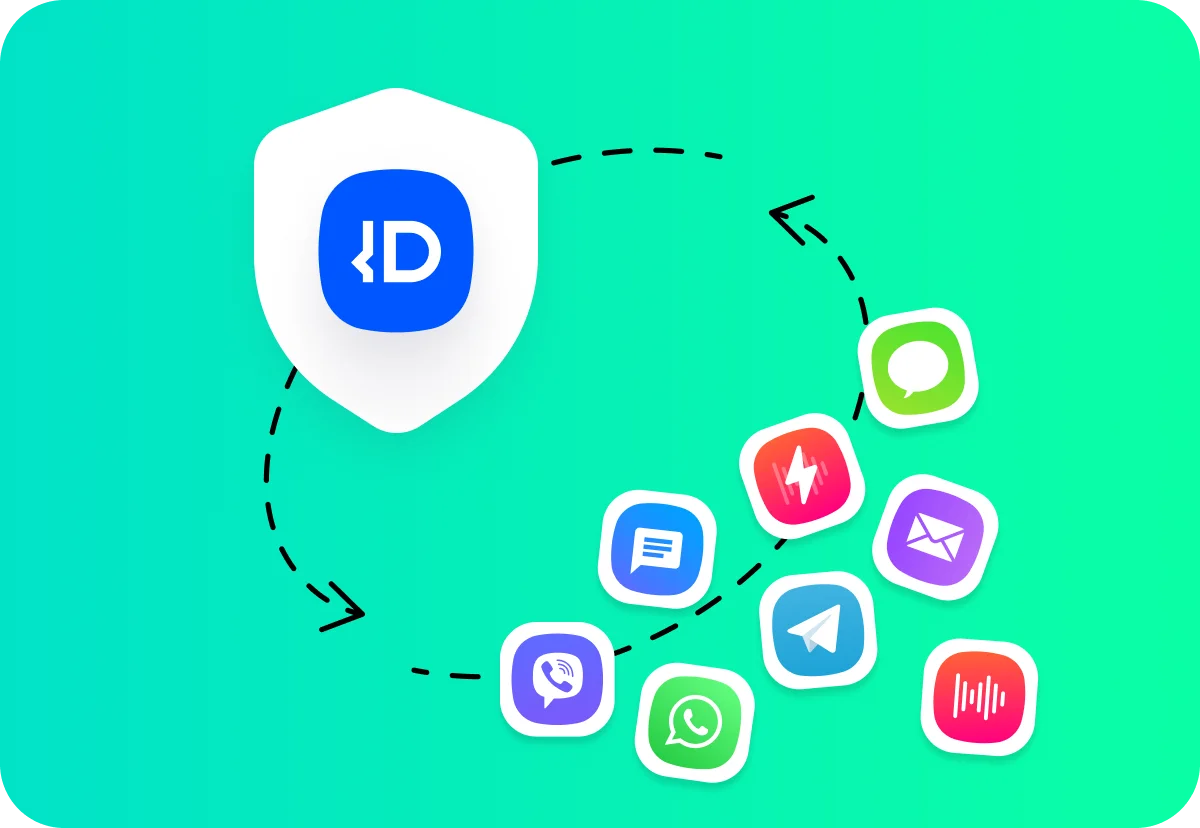
Verify your users by SMS, WhatsApp, Viber, Telegram, Voice, and more, with configurable fallback if a channel fails.


The easy way to verify users
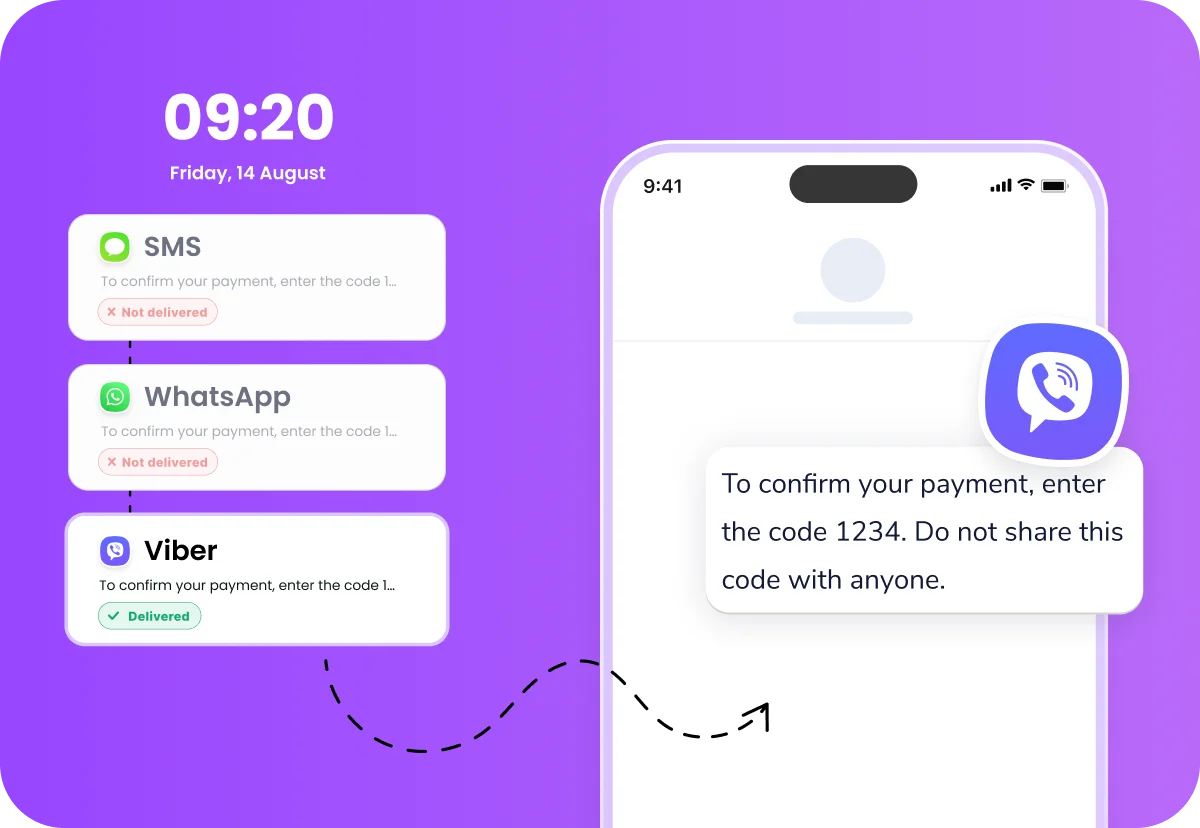
Set your fallback order once. This means if a send fails, the next channel in your sequence is tried
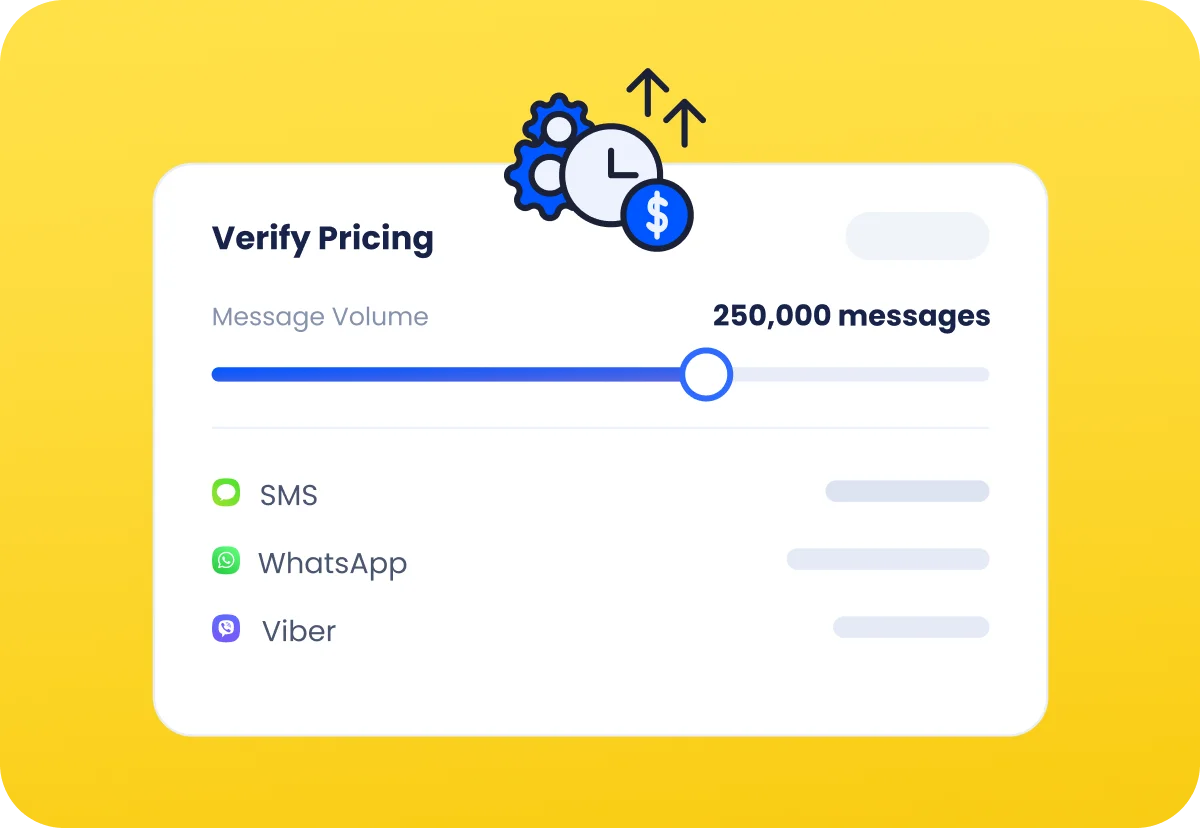
Calculate your costs
| Channel | Pricing model | Starting from |
|---|---|---|
SMS | per message | $0.013 |
WhatsApp | per conversation | $0.0011 |
Viber | per message | $0.0011 |
Voice | per minute | $0.0105 |
Flash Call | per call | $0.005 |
Email | per email | $0.0015 |


What our customers say about us


Reach your users on any channel with Verify API


How it works
Switching providers? You’ll be live before you know it.
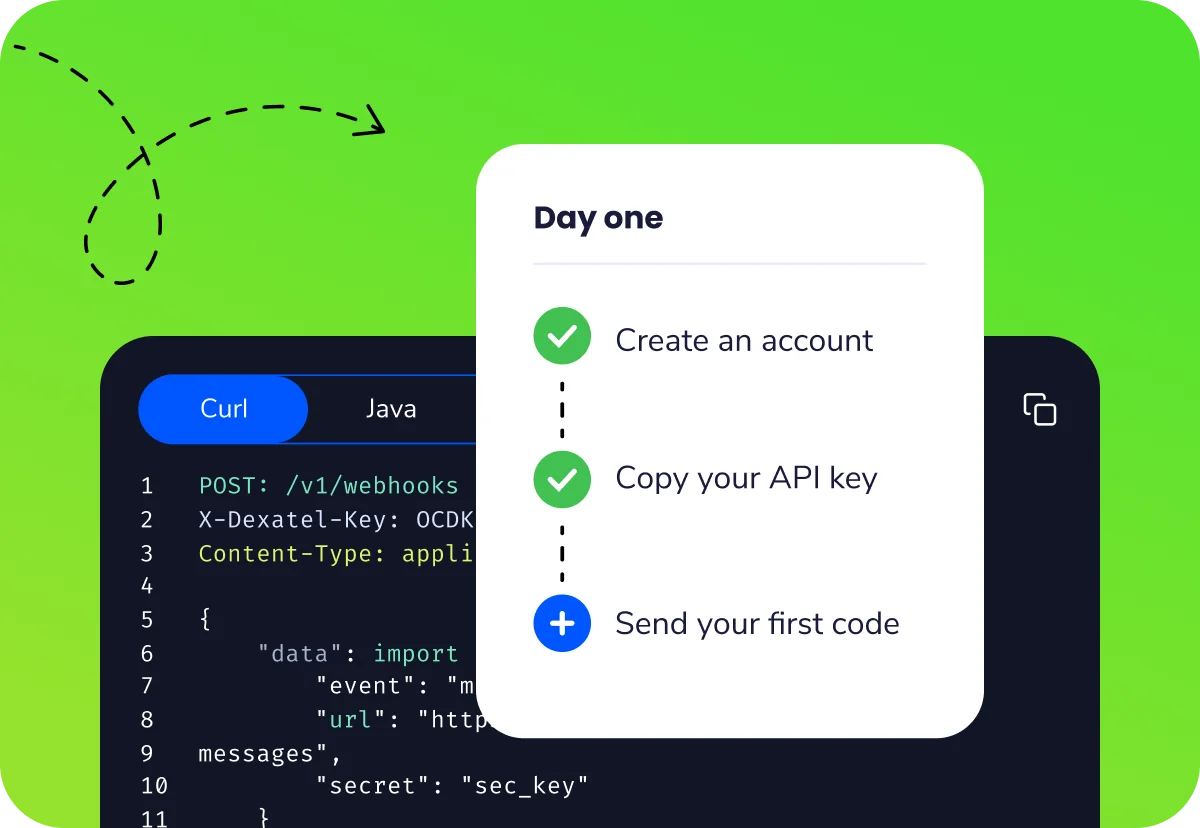
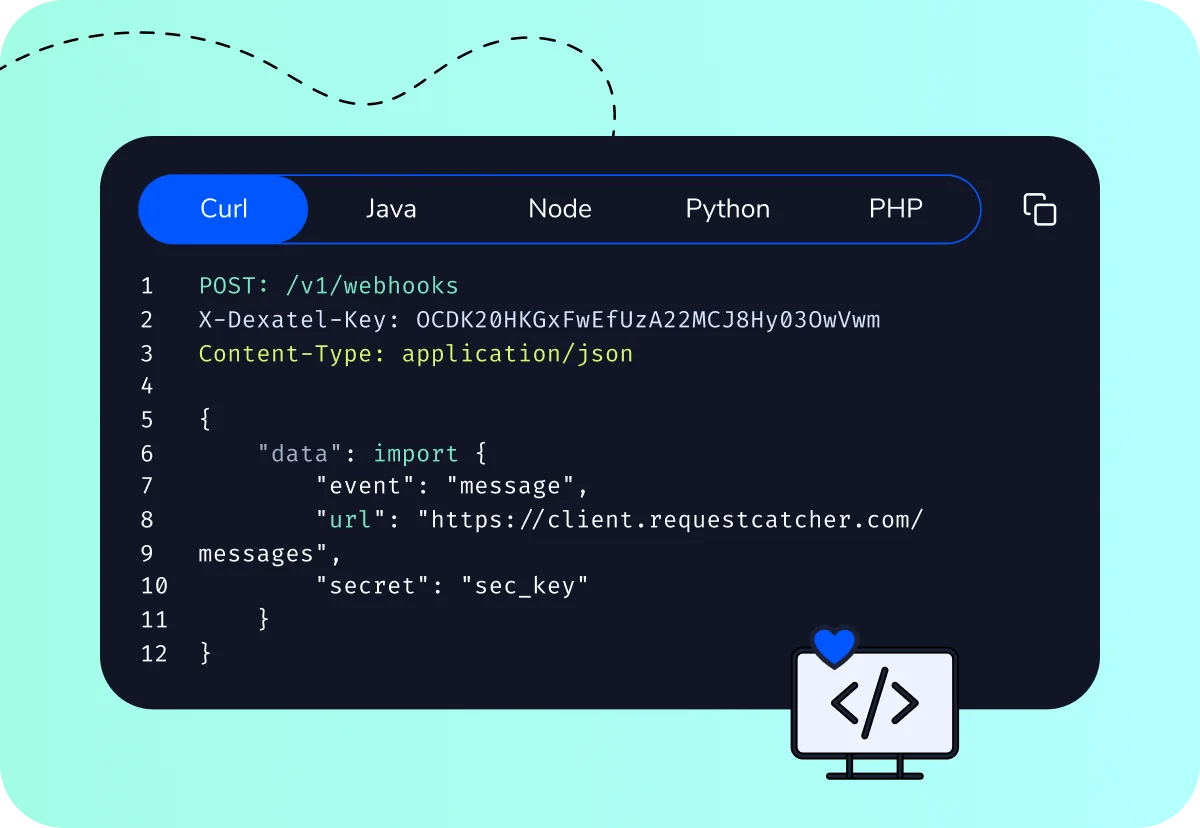
Most of our customers come from another provider. That’s why we make setting up so easy. We provide a developer-friendly REST API, SDKs for quick implementation, and SMPP support.
Verify us, too


How do teams use Verify API?

Logins and 2FA
Add a second layer to sign-ins via SMS, WhatsApp, Voice, and more. A stolen password on its own gets nobody in.

Transactions and payments
Require a code before payments, withdrawals, and account changes, the proof regulators expect and customers trust.

Deposits and player verification
Fast codes at deposit and login for iGaming, delivered reliably in the markets that matter.

Rider and driver verification
Verify users, drivers, and couriers in seconds, at rush-hour volumes.

Fake sign-up and spam prevention
Real-time number checks, rate limits, and abnormal-behavior detection. Stop bots and fake accounts before a code ever sends, and before they hit your invoice.

Password resets and account recovery
Confirm it's really them before a password changes or an account moves. Faster for real users, a wall for everyone else.
Ready to get started?
Frequently asked questions
What's the difference between OTP and 2FA?
An OTP (one-time password) is a code sent to a user to confirm their identity. Two-factor authentication (2FA) uses two different forms of evidence to confirm identity. An OTP is commonly used as the second factor alongside a password, but it can also be used in other verification flows.
Which channel should I use for verification?
It depends on where your users are. SMS works almost everywhere and is the standard default. With Dexatel you don’t have to choose one: set a fallback order and the verification API works down the list.
How does Dexatel Verify handle delivery failures?
If a code fails on the primary channel, Dexatel sends it on the next channel in your configured sequence, for example SMS, then WhatsApp, then Viber. You set the fallback order in each verification request, with up to five channels.
Is Dexatel Verify GDPR compliant?
Yes. Dexatel is ISO 27001 certified and GDPR compliant, and European data stays in the EU. Codes are one-time and short-lived, and delivery data is handled under GDPR-aligned retention rules.
Can I test the SMS verification API before going live?
Yes. Sign up for the free trial, which includes trial credit to send real messages to real phones. There is no sandbox, so trial messages are delivered to live numbers.
How does Dexatel prevent OTP fraud or SMS-pumping?
Dexatel rate limits verification requests to 20 per second per account, and you can block countries in the fraud tools. Lookup checks numbers separately and is billed on its own. You pay for fraudulent traffic: Dexatel does not offer a protection programme, credits or refunds after an attack, so set your own limits in your application. For deeper protection, Dexatel Lookup returns each number's validity, line type, carrier, country, and whether it's been ported.
Do you offer an SMS verification service API for high-volume traffic?
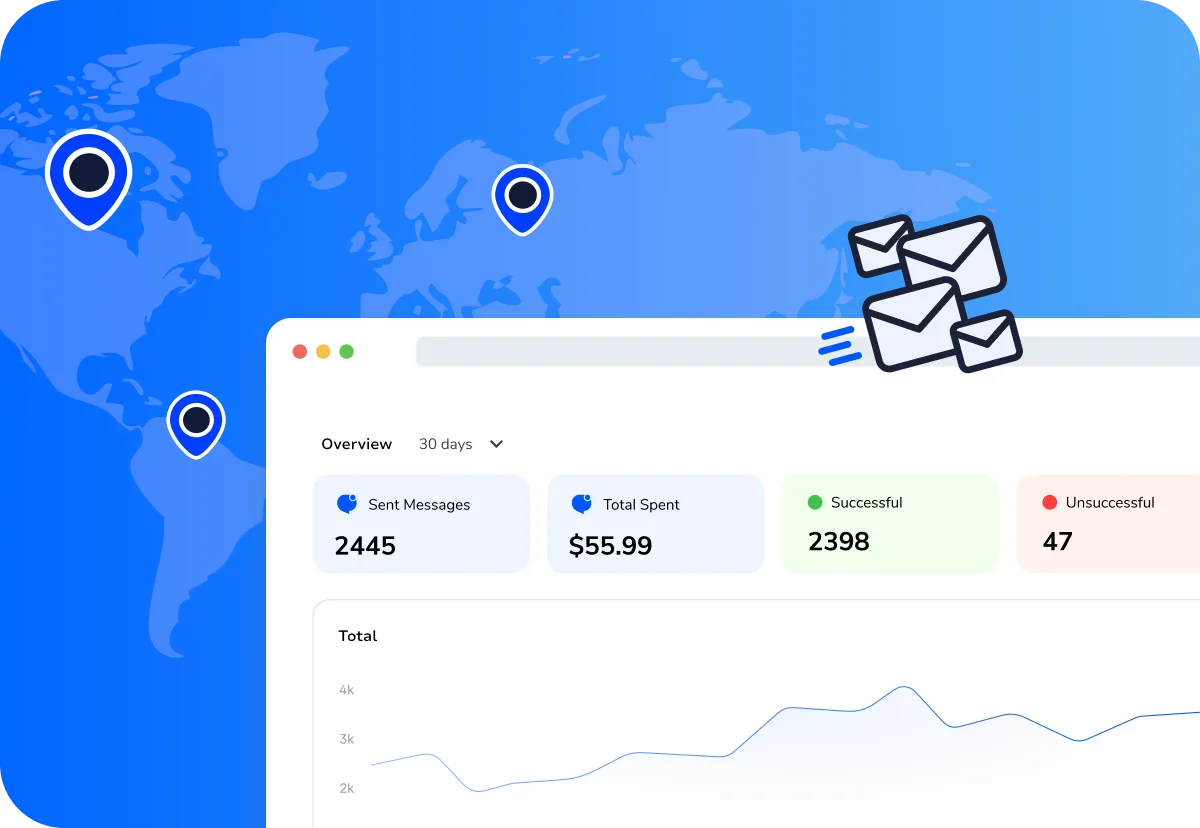
Yes. Dexatel's SMS verification service API is built for scale, with 100+ direct carrier connections and support for high-volume, rush-hour traffic. Real-time number validation and fallback ordering keep success rates high and costs down even at peak.
