Viber Business Messaging Is Changing in 2026: What Businesses Need to Prepare for Before July 1


Published: May 14, 2026

Business messaging platforms are becoming stricter, more structured, and significantly more interactive.
And now, Viber is moving in the same direction.
Starting July 1, 2026, Rakuten Viber is implementing major changes to how businesses send transactional and verification messages on the platform. The biggest shift is the mandatory use of pre-approved Message Templates for automated business communication, including OTPs, notifications, alerts, and transactional updates.
At the same time, Viber is also expanding its interactive messaging capabilities with richer formats designed to improve customer engagement and conversational experiences.
AtDexatel, we’ve already expanded our Viber messaging capabilities with support for:
Viber List Templates
Viber Carousel Templates
These new template types are now available for:
Viber campaigns
Viber template creation and management
Interactive business messaging flows
For businesses already using Viber Business Messaging, this is not just another feature release. It’s a major infrastructure and compliance transition that will affect messaging workflows, authentication strategies, customer engagement, and campaign experiences across industries.
What Is Changing in Viber Business Messaging?
Rakuten Viber is introducing several important updates that businesses need to prepare for before July 1, 2026.
Mandatory Transactional Message Templates
The biggest operational change is the requirement to use approved Message Templates for transactional and verification messaging.
This includes:
order confirmations
shipping notifications
appointment reminders
account alerts
onboarding flows
transactional updates
Migration officially started on April 1, 2026.
Businesses currently relying on free-form automated messaging flows will need to:
audit existing notification systems
redesign transactional flows
submit and approve templates
update APIs and automation logic
ensure compliance with Viber’s new formatting requirements
After July 1, unstructured or unapproved transactional messages may face:
reduced delivery performance
filtering
delivery restrictions
compliance issues
This marks a major shift toward a more WhatsApp-like business messaging ecosystem.
Dexatel Now Supports the New Viber Interactive Templates
Alongside the broader template transition, Viber is also introducing richer interactive messaging experiences.
Dexatel now supports both new interactive template formats:
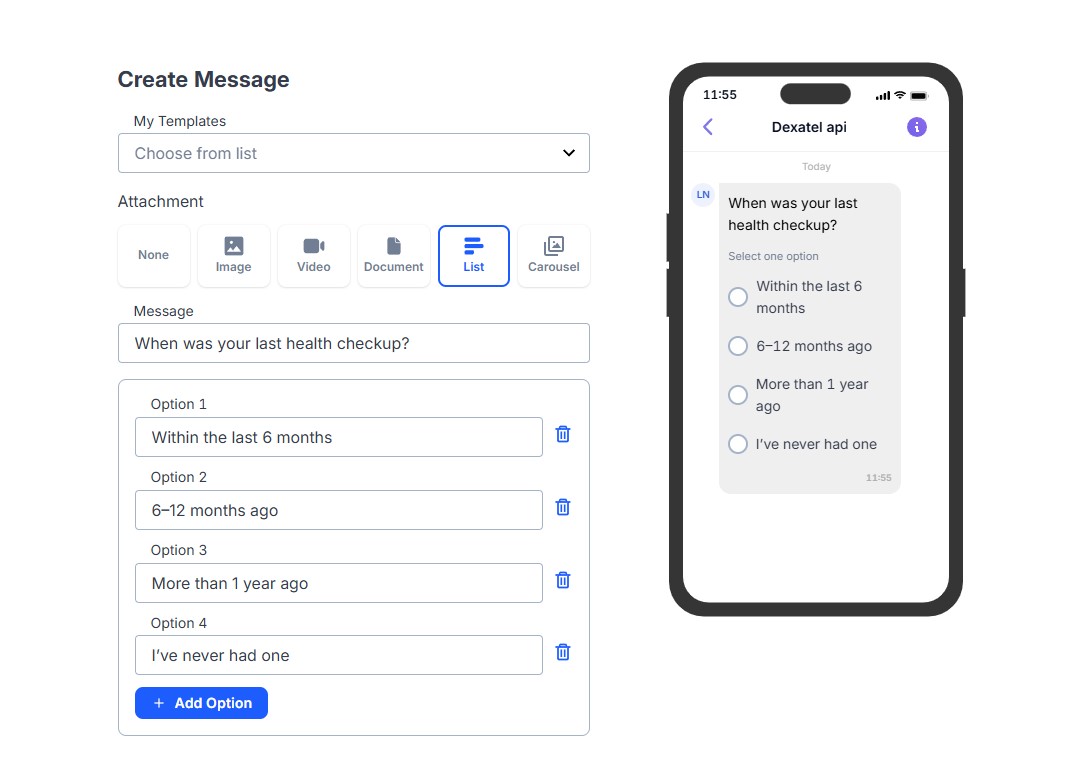
Viber List Templates
List Templates allow businesses to present structured options directly inside a Viber conversation.
Instead of sending long text instructions or multiple links, businesses can guide users through interactive selections inside the chat itself.
Common use cases:
customer support flows
onboarding guidance
delivery selection
account management
FAQ navigation
payment actions
subscription management
Viber Carousel Templates
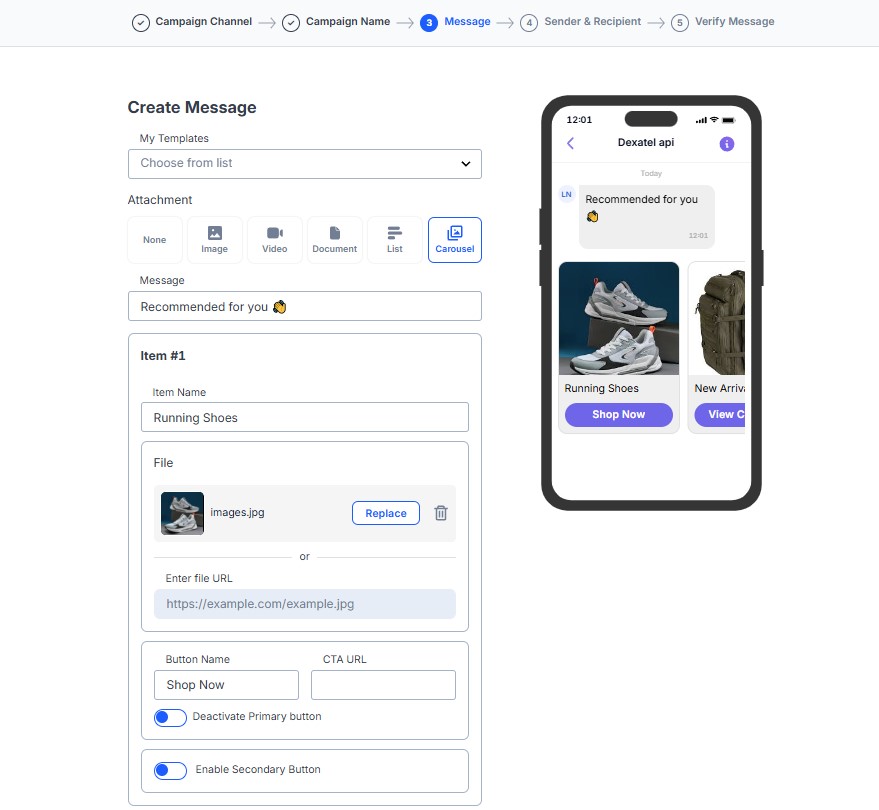
Carousel Templates introduce swipeable card-based experiences directly inside Viber chats.
Each card can include:
images
titles
descriptions
buttons
links
call-to-actions
This enables significantly richer customer journeys compared to traditional notification messaging.
Common use cases:
eCommerce product recommendations
abandoned cart recovery
fintech onboarding
gaming promotions
travel offers
event ticketing
personalized campaigns
The messaging experience becomes much more visual, interactive, and conversion-focused.
Why Viber Is Making These Changes
The messaging industry overall is evolving rapidly.
For years, business messaging channels were mostly used as:
OTP delivery pipes
notification systems
campaign broadcast channels
That model is changing.
Platforms now want messaging to become:
conversational
interactive
trusted
structured
user-friendly
This is why we’re seeing:
template approvals
stricter compliance policies
verified sender systems
anti-spam enforcement
interactive messaging formats
across nearly every major messaging ecosystem.
Viber is clearly moving in that same direction.
New Fair Usage & Security Policies
Another major update is the introduction of Viber’s new Standalone Fair Usage Policy.
This replaces older fragmented policy systems and introduces stricter enforcement around:
spam
fraud
account farming
unsolicited messaging
abusive automation practices
For businesses, this means consent management becomes increasingly important.
Companies should review:
opt-in collection flows
user consent tracking
campaign targeting logic
messaging frequency
sender verification practices
Businesses with poor messaging hygiene may see:
delivery degradation
compliance warnings
account restrictions
This is especially important for high-volume industries like:
fintech
iGaming
marketplaces
eCommerce
SaaS
Updated Technical & Operational Requirements
Viber is also updating operational onboarding and management requirements.
Dedicated Point of Contact Requirement
Starting April 1, 2026:
new client onboarding requires a dedicated point of contact
This is designed to improve operational communication and compliance management.
Partner Portal Improvements
Viber has also expanded self-management capabilities through its Partner Portal.
Businesses can now update various technical fields and messaging configurations directly without depending heavily on Viber support teams.
Operationally, this should simplify:
template management
configuration updates
technical maintenance
messaging adjustments
New User Experience Features Businesses Should Care About
Some of the smaller updates may actually have meaningful engagement impact.
Tap & Copy Functionality
Messages can now support “Tap & Copy” interactions for:
coupon codes
tracking numbers
verification references
Small UX improvements like this can significantly reduce friction in customer journeys.
Unread Chats Folder
Viber users now have a dedicated unread chats folder.
This increases pressure on businesses to make messages:
concise
relevant
engaging
clearly actionable
Low-quality or repetitive business messaging may become easier for users to ignore.
How These Changes Will Affect Different Industries
eCommerce
Interactive messaging creates stronger opportunities for:
abandoned cart recovery
personalized offers
product discovery
order updates
retention campaigns
Carousel Templates are especially valuable here.
Fintech
Fintech businesses can improve:
onboarding
verification flows
fraud alerts
account notifications
authentication journeys
through more guided interactive messaging experiences.
iGaming and Betting Platforms
This may become one of the strongest use cases for Viber’s new interactive capabilities.
Gaming companies already depend heavily on:
fast onboarding
OTP delivery
retention campaigns
promotional engagement
Interactive templates can improve:
onboarding completion
campaign conversion
reactivation performance
customer engagement
Logistics and Delivery Platforms
List Templates work particularly well for:
delivery status updates
support flows
delivery time selection
order confirmations
rescheduling interactions
What Businesses Should Prepare Before July 1
1. Audit Existing Messaging Infrastructure
Review:
OTP flows
transactional notifications
onboarding journeys
automation systems
campaign messaging
Especially anything relying on free-form messaging.
2. Start Template Migration Early
Do not wait until the final weeks before enforcement.
Template approvals, localization, testing, and optimization can take time.
3. Review Consent & Compliance Practices
Businesses should ensure:
proper opt-in collection
verified sender setup
compliant messaging practices
clear unsubscribe mechanisms where relevant
4. Improve Customer Experience, Not Just Compliance
The businesses that benefit most from these changes will not simply adapt for compliance.
They’ll use interactive messaging to:
reduce friction
improve onboarding
increase engagement
shorten support journeys
improve conversion rates
The Messaging Industry Is Becoming More Interactive
The era of basic text-only business messaging is ending.
Messaging platforms are evolving toward:
conversational experiences
interactive customer journeys
verified communication
structured messaging ecosystems
Viber’s 2026 changes are part of a much larger industry transition happening across business messaging globally.
For businesses, this is both:
a compliance shift
and a customer experience opportunity
Companies that adapt early will likely gain significant advantages in engagement, onboarding performance, and messaging efficiency over the next few years.