


What Is a Landline Number? How It Works and How to Spot One


Published: Nov 26, 2026
Most people use mobile phones today, but businesses still have landline numbers in their contact lists. That matters because most landlines cannot receive SMS. If you send a marketing text or verification code to one, the message may never arrive.
Here is what a landline number is, how it works and how to check whether a number can receive texts.
Short answer: A landline number is a phone number assigned to a fixed-line phone service at a specific address, such as a home or office phone. Unlike a mobile number, it is not tied to a SIM card, and most landlines cannot receive SMS. In countries like the UK, landline numbers have their own prefixes, but in the US and Canada they look exactly like mobile numbers, so you need a number lookup to tell them apart.
What is a landline number?
A landline number belongs to a phone service at a fixed location, such as a home or office. You may also hear it called a fixed-line, wireline or home phone number.
Landlines traditionally used copper telephone wires. Many now use digital networks, but they still serve a fixed location rather than a mobile phone.
In some countries, the first digits tell you whether a number is a landline:
- United Kingdom: landline numbers, called geographic numbers, start with 01 or 02, and the first digits form the area code, such as 020 for London. Mobile numbers start with 07 (Ofcom).
- United States and Canada: landline and mobile numbers use the same 10-digit format, and a number can move between a landline and a mobile service when its owner switches provider (FCC). The number alone does not tell you which it is.
How does a landline work today?
Many landlines are moving from copper wires to digital networks. In the UK, the switch to digital phone services is planned for January 2027. Calls will use internet-based technology known as VoIP or digital voice (Ofcom, GOV.UK).
For customers, the phone number and calling experience can stay much the same. But switching to digital does not automatically make a landline able to receive SMS.
Landline vs mobile vs VoIP number
These number types use different connections and do not all support texting.
| Landline number | Mobile number | VoIP number | |
|---|---|---|---|
| Connected to | A fixed line at one address | A SIM card in a mobile device | An internet-based phone service or app |
| Location | Fixed | Moves with the phone | Depends on the service |
| Receives SMS | Usually not | Yes | Depends on the provider |
| Typical use | Homes, offices, front desks | Personal and work phones | Business phone systems, apps |
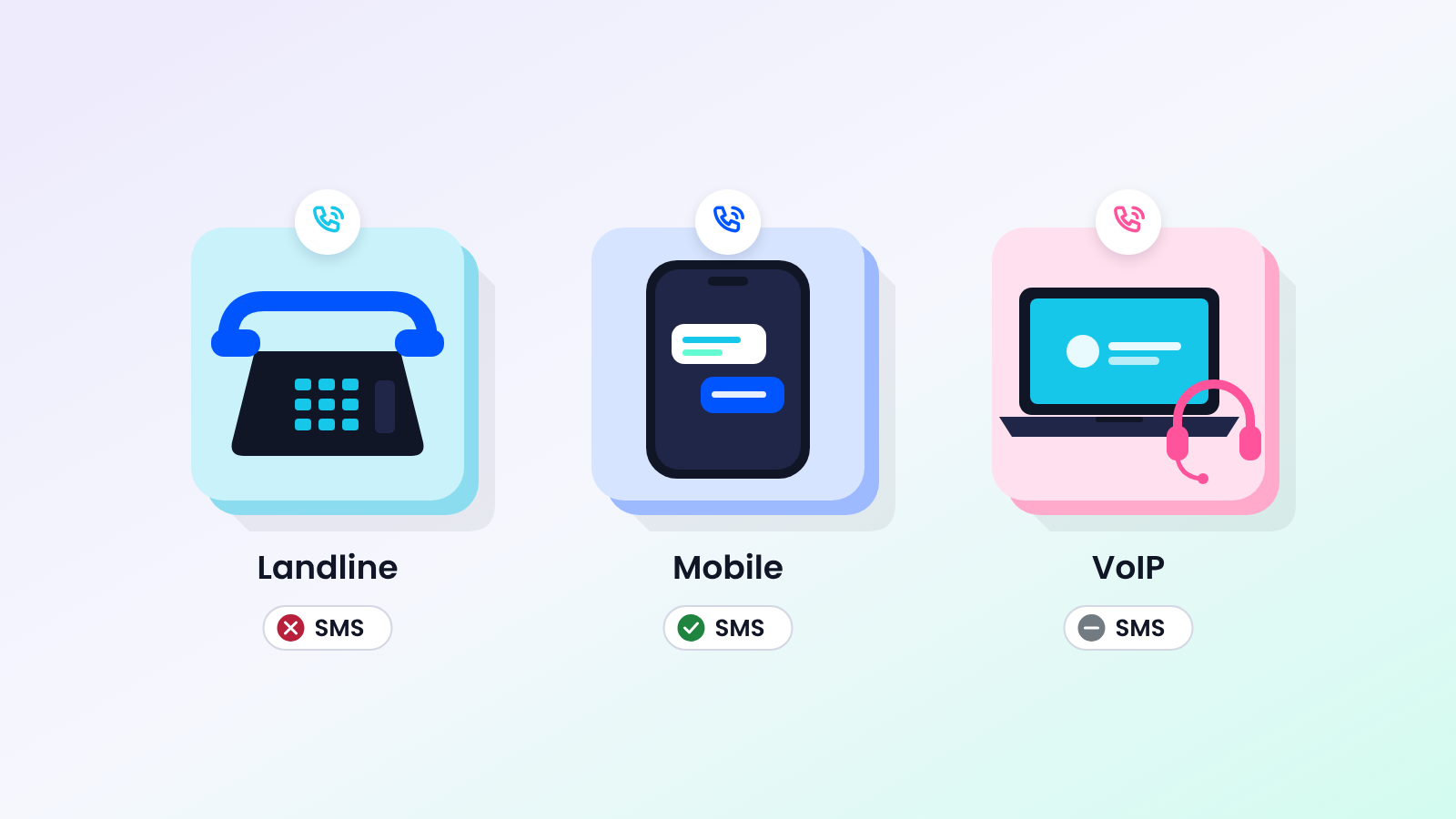
A VoIP number is a phone number that works over the internet instead of a traditional phone line. Our glossary entry on VoIP texting explains how these numbers handle messages.
How many people still use a landline?
Most US adults use mobile phones instead of landlines. In the second half of 2025, 79.2% lived in wireless-only households and had a mobile phone of their own. Only 1.6% had a landline and no mobile phone (CDC National Center for Health Statistics).
Landlines are more common among older adults. Of adults aged 65 and over, 63.4% lived in wireless-only households. If you serve older customers, landlines may appear more often in your contact list.
Can you text a landline number?
Usually not. Most landlines cannot display text messages, so an SMS sent to one will normally fail to arrive.
Some carriers can turn a text into a voice call, where the message is read aloud to the landline. These services depend on the carrier and the country, so a business should not count on them for alerts, marketing or verification codes.
How to tell if a number is a landline
You can check a number in three ways:
- Check the prefix. In countries with separate ranges, such as the UK, the first digits tell you. This does not work in the US and Canada.
- Look at how the number was collected. A number entered in a "home phone" or "office phone" field is more likely to be a landline. This is a hint, not proof.
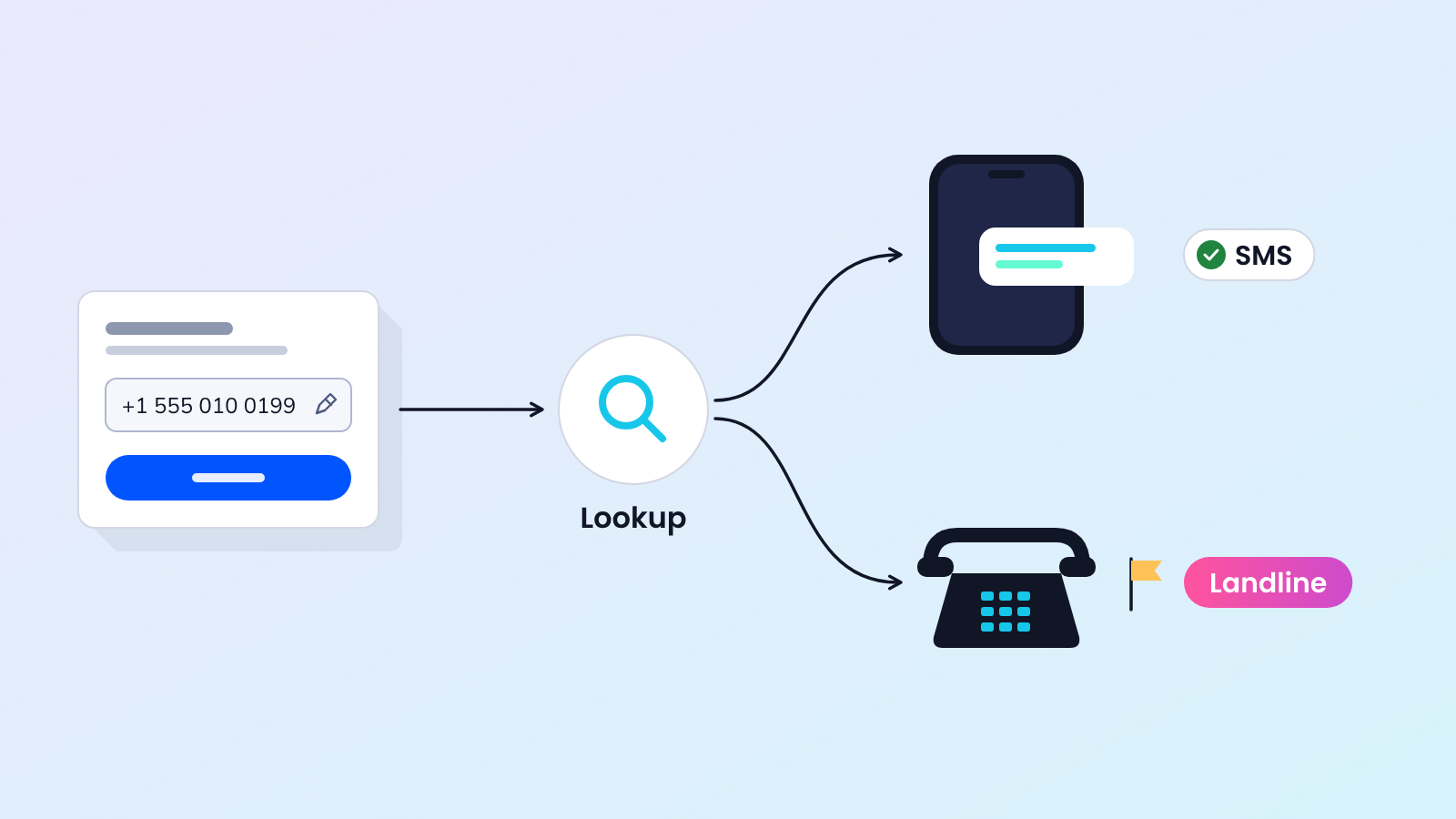
- Run a number lookup. A lookup asks the network about the number and returns its line type. This is the most reliable method where landline and mobile numbers look the same.
Dexatel's phone number lookup returns the line type for a number as mobile, landline or service, along with the current carrier, whether the number has been ported to another provider and its live network status. It also cleans the number first, so formatting errors are caught before any network check. Lookups cost from $0.006 each, and the first 20 numbers are free. For a quick one-off check, try Dexatel's free carrier lookup tool.
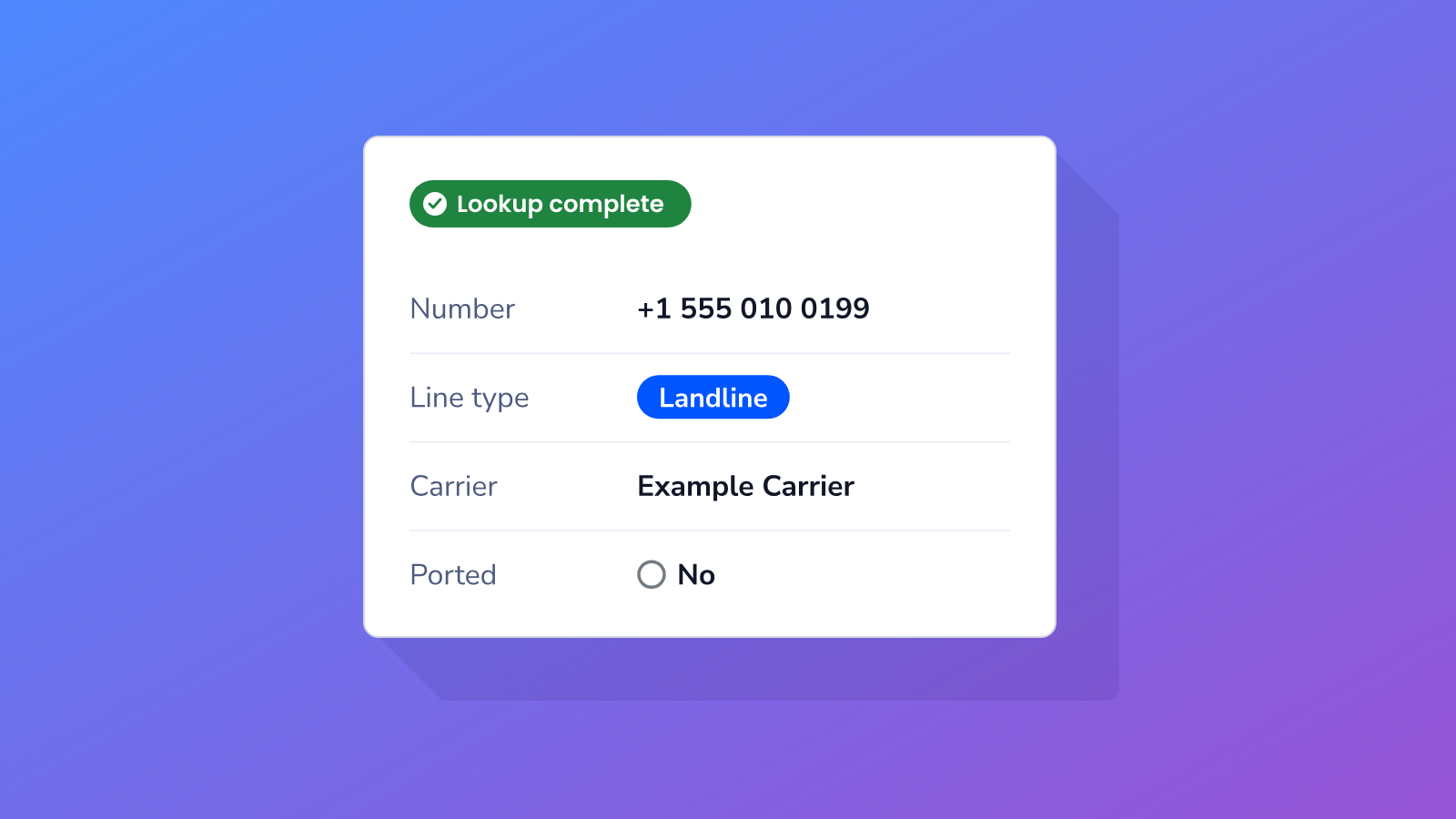
Checking the current carrier also matters because people can move numbers between networks. Read our guides to identify a phone number carrier and mobile number portability to learn why prefixes can be outdated.
Why landline numbers matter for businesses
Checking for landlines helps businesses avoid failed texts and choose a better way to reach customers.
SMS sent to landlines is wasted
Sending SMS to landlines can waste money because most cannot receive texts. Check line types before a campaign so you can exclude landlines or contact those customers another way.
Verification codes need a voice option
If a customer enters a landline number, they may not receive an SMS verification code. A voice call is an alternative. With voice OTP, the code is read aloud in an automated call. Dexatel Verify supports voice as a verification channel, and you can read more on the Voice OTP channel page.
A landline is not a red flag
A landline number does not mean a customer is suspicious or less valuable. Use the number type to decide how to contact them, not whether to accept them.
FAQ
Is a landline the same as a home phone?
Usually, yes. A home phone is the most common kind of landline, but offices, shops and front desks also use landline numbers. What makes it a landline is that the number belongs to a fixed line at one address, not to a mobile device.
Is a landline number the same as a phone number?
A landline number is one type of phone number. Mobile numbers, VoIP numbers and toll-free numbers are other types. In the US and Canada they all use the same 10-digit format.
Can a landline number become a mobile number?
Yes, in many cases. In the US, numbers can be ported between landline, internet-based and mobile providers when the customer stays in the same area. A number that moves to another provider can change its line type, which is why a fresh lookup is more reliable than an old record. Dexatel's lookup returns a ported flag showing whether a number has moved.
Can a landline receive a verification code?
Not by SMS in most cases. A landline can receive a verification code by voice call, where an automated voice reads the code aloud.
How do I find out if a number is a landline?
Run a number lookup, which returns the line type from the network. In countries with separate landline prefixes, such as 01 and 02 in the UK, the first digits also tell you.
What should businesses do next?
First, check how many landline numbers are in your contact list. Exclude them from SMS campaigns and offer voice verification for customers who cannot receive texts.
Dexatel Lookup helps identify landlines, while Dexatel Voice OTP offers a way to deliver verification codes by call instead of SMS.


