What Is Conversational Messaging: A Complete Guide


Published: Jul 3, 2023
Updated: Apr 9, 2025

Conversational messaging has emerged as a game-changer, revolutionizing the way clients and businesses interact on the human-electronic interface.
As businesses seek to expand their customer reach, enhance brand promotion, and boost sales, this continues to stand out as a powerful marketing tool.
Now, it even has the capacity to replace traditional forms of customer communication.
With the rise of messaging apps and the convenience of SMS, conversational texting offers a way to cut through the noise.
It allows you to have meaningful two-way conversations with customers.
What Is Conversational Messaging?
Conversational messaging, in essence, is the art of informal communication between two or more parties using text messages.
Within the framework of business-customer relations, conversational text messaging has become a go-to tactic.
Many opt for this to increase consumer engagement by leveraging accessibility and informality, often as part of SMS marketing strategies.
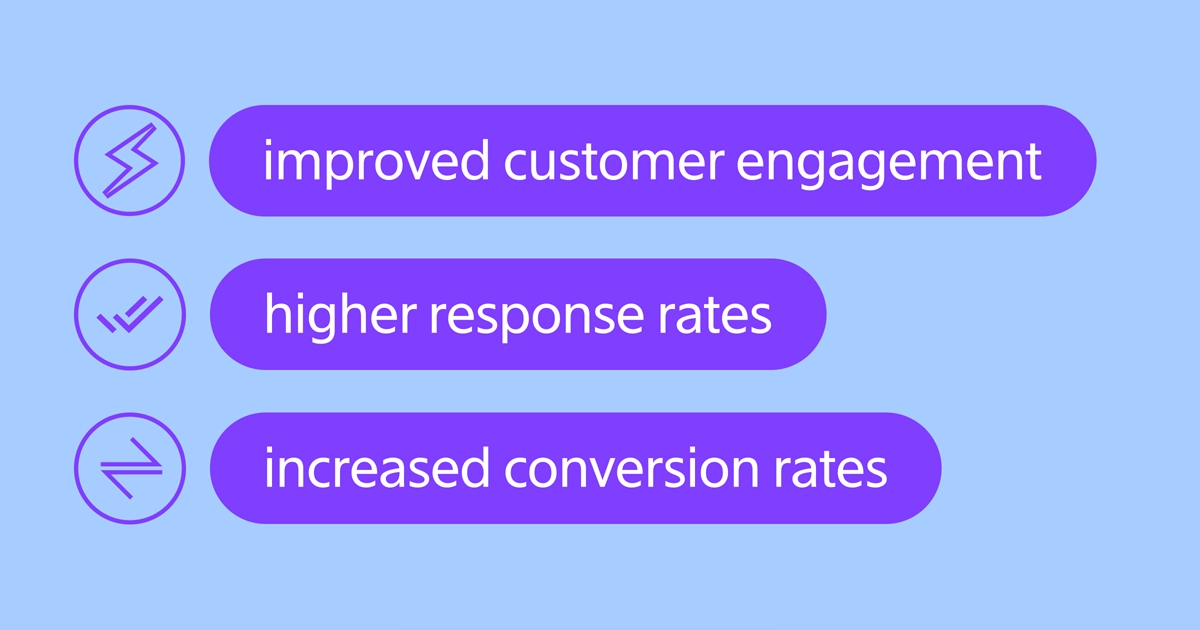
Using conversational messaging, businesses can significantly increase client engagement rates.
So, if you're looking to build stronger customer relationships, incorporating conversational marketing into your strategy may be the key to unlocking exponential growth.

Key Principles of Conversational Messaging Strategies
Real-Time Interactions
Unlike traditional marketing methods that rely on scheduled campaigns, conversational marketing thrives on instant, on-demand communication. It allows brands to respond promptly to customer inquiries, provide assistance, and guide users through their purchasing journey in real time.
Personalization
Conversational marketing tailors interactions to individual customer preferences and needs. By utilizing customer data and insights, businesses can craft personalized messages and recommendations, making customers feel valued and understood.
Authenticity
Authenticity is not just a buzzword; it is the cornerstone of a successful conversational marketing strategy. Brands aim to engage in genuine conversations, foster trust, and build lasting relationships. This human touch stands in stark contrast to the one-size-fits-all nature of traditional advertising.
Shift from Traditional Marketing
Conversational marketing is a major leap forward from traditional marketing strategies, which often involve broadcasting messages to a wide audience with limited room for personalized engagement. The advent of digital communication platforms has enabled this shift, allowing brands to connect with customers in more direct and immediate ways.
Where traditional marketing focuses on pushing messages to consumers, conversational marketing revolves around pulling customers in through engaging conversations. This shift aligns with the changing expectations of modern consumers, who seek seamless interactions and personalized experiences in their interactions with businesses.
Main Types of Conversational Messaging
There are 2 types of conversational text messaging: asynchronous and synchronous.
Asynchronous Conversational Text Messaging
Asynchronous messaging refers to a type of two-way communication that occurs when one party sends a message and the other party replies when they have time.
In other words, this is a conversation that can be left and picked up at any time without losing its relevance.
This type of conversational messaging is ideal for customer service inquiries that do not require immediate attention.
Asynchronous messaging is also great when it comes to dealing with complex issues that require more than one session to fix.
If you want to let your customers communicate with your business at their own pace, this is the way to go.
Get Started Now
Reach your clients now and claim your 30-day free trial. No credit card required.
Synchronous Conversational Text Messaging
On the opposite end of the spectrum is synchronous messaging.
This refers to real-time communication where both parties are actively engaged.
This is a type of conversational text messaging that has a defined beginning and end.
Synchronous messaging is ideal for urgent customer support inquiries that require immediate attention.
With the rise of AI customer experience, this type of conversational messaging is often automated to quickly answer common inquiries in real time.
What Are the Advantages of Conversational Texting?
Conversational texting offers several advantages over traditional forms of customer-business communication, such as email or phone calls, especially if you're implementing an omnichannel messaging approach.
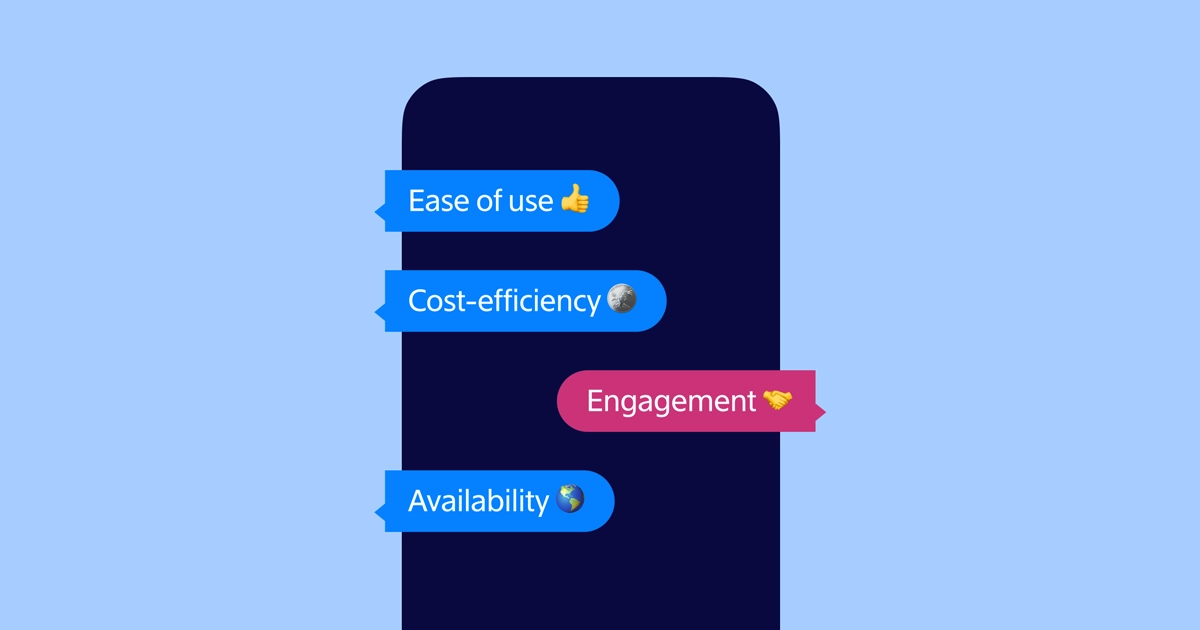
1. Convenience
Gone are the days of having to wait on hold or schedule a call.
Conversational texting puts the power back in the hands of customers, allowing them to communicate with businesses with SMS chat.
It’s fast, simple, and efficient.
2. Accessibility
Conversational SMS texting is accessible to anyone with a mobile phone, making it easy to connect with customers anytime and anywhere.
3. Cost-Effectiveness
Automating minor customer inquiries through conversational messaging is more cost-effective than traditional forms of communication.
If you were to use phone calls or emails, it would require more resources in terms of time and human capital.
4. Engagement
By engaging with customers in a natural and familiar tone, businesses can create a sense of intimacy and connection with their audience.
This leads to stronger brand loyalty and increased customer satisfaction.
Conversational Messaging Channels
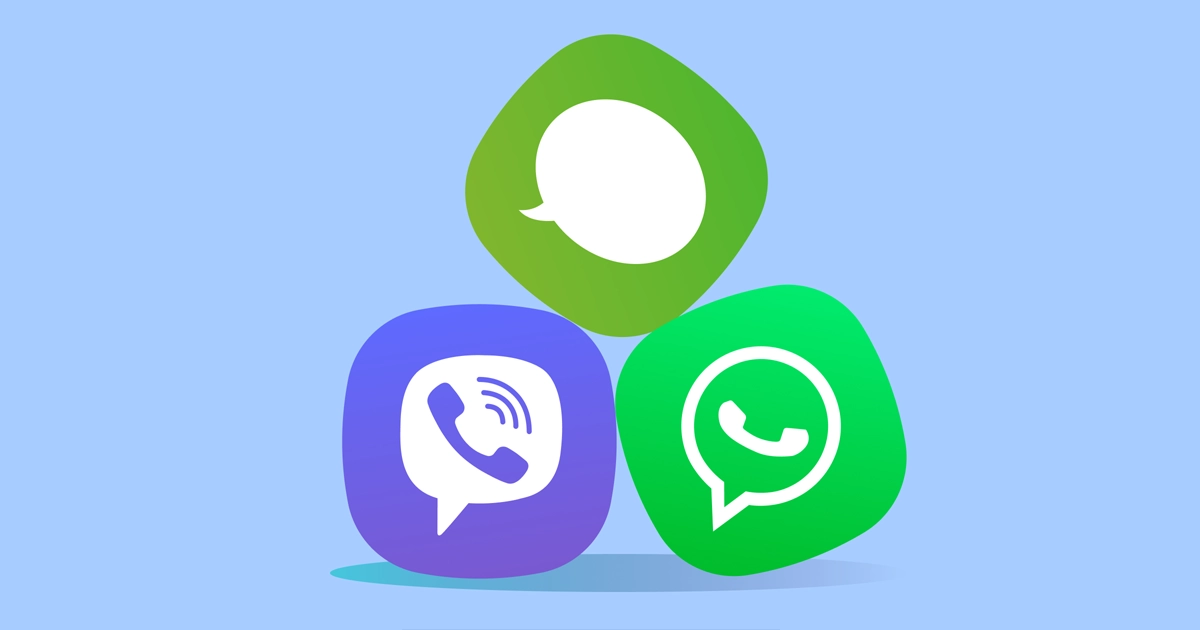
There are several messaging channels for conversational text messaging.
Each of them has its advantages and disadvantages, depending on the needs of the business and customer preferences.
The key is to find a conversational messaging platform that feels most authentic and best serves your business’s goals.
Conversational Messaging With SMS
Business text messaging is the most widely used form of conversational messaging, as it is accessible to anyone with a mobile device, no matter if it's iOS or Android.
SMS is also the only way to engage customers in a conversation without an internet connection.
Conversational Messaging With WhatsApp
WhatsApp Business is a popular messaging app with billions of users.
While it was only used by individuals for a long time, many businesses today have adopted it as their preferred method of communication.
WhatsApp allows businesses to create groups and broadcast messages to customers, making it easy to reach a large audience.
However, this app does require an internet connection to function.
This may pose a problem for businesses that prioritize instantaneous visibility and engagement through conversational messaging.
Conversational Messaging With Viber
Viber Business is another messaging app that is fairly similar to WhatsApp in the way that it operates.
This conversational text messaging app might suit your business if you’d like to create a public account that would make it easy for customers to find and message you.
Much like WhatsApp, a drawback to Viber is its ability to work solely when connected to the internet.
However, if that’s not an issue, then this conversational messaging app could be perfect for your business.
Conversational Messaging With Chatbots
Chatbot marketing answers customers’ questions and analyzes key insights from clients. What was the purpose of visiting the website? Are they interested in purchasing your products or services? The live chat either helps the client make a purchase or directs them to the right person, who’ll answer further questions and requests in real time.
Whether you use artificial intelligence to help with customer support issues or have meaningful conversations with qualified leads, you'll find several benefits that come with this feature.
With chatbots becoming increasingly advanced, the role of AI in conversational marketing is growing. Technologies like machine learning and natural language processing (NLP) allow modern chatbots to engage in human-like conversations with customers. They can understand context, answer complex questions, and give personalized recommendations—while being available 24/7.
By learning from human interactions and adapting to customer needs, AI-powered tools like SMS chatbots offer a high-quality, personalized experience and serve as a valuable asset for lead generation.
Why Should Businesses Switch to Conversational SMS?
As businesses navigate the digital landscape, conversational SMS text messaging further proves its relevance with several perks in retail and beyond.
This trending communication tool is cost-effective and convenient. And on top of that, it offers several advantages that solve many of your customer engagement problems through personalization and accessibility. By leveraging SMS messaging, businesses can create personalized customer interactions, resulting in a more memorable and engaging experience.
Furthermore, they take up less space on a user's screen, increasing the likelihood of them reading and digesting the entire text in the form of a simple notification. This is unlike emails, which often go unopened, buried among a sea of others in the junk folder. There’s no denying how impactful the efficient use of 160 characters can be for your business. Whether you’re sending a personalized promo code, seasonal greetings, or even reminders on special days, a conversational SMS can work wonders for customer acquisition and retention.
Implementing a Conversational Marketing Strategy
Creating and executing an effective conversational marketing strategy requires a thoughtful and systematic approach.
1. Choose Appropriate Channels
Identify the communication channels that align with your target audience. Depending on your audience's preferences, you might focus on SMS, chatbots on your website, instant messaging apps, or a combination of these.
2. Design Personalized Messaging
Craft messages that resonate with your audience. Utilize customer data to tailor your content and recommendations to each individual, making the interactions more relevant and engaging.
3. Integrate Automation With Authenticity
Leverage automation tools like AI-powered chatbots to handle routine customer queries and tasks. However, ensure that the automation maintains a human touch and can seamlessly transfer users to human agents when necessary.
4. Implement Segmentation
Segment your audience based on factors such as demographics, behavior, and purchase history. This allows you to send targeted messages that cater to specific needs and interests.
5. Create Conversation Flows
Map out conversation flows that guide users through various scenarios. Consider different paths users might take and design responses that address their queries or guide them towards desired actions.
6. Test and Optimize
Continuously test your conversational marketing strategy. A/B test different message variations, timings, and channels to determine what resonates best with your audience. Use analytics to track performance and make data-driven improvements.
7. Ensure Consistency Across Channels
Maintain a consistent brand voice and messaging across all conversational channels. This ensures a unified and recognizable experience for users interacting with your brand.
8. Monitor and Adapt
Regularly monitor your conversational interactions and gather feedback from customers. Use this information to adapt and refine your conversational strategy over time, ensuring that it remains relevant and effective.
9. Measure ROI
Track key performance indicators (KPIs) that align with your goals, such as response time, conversion rates, and customer satisfaction. Assess the return on investment (ROI) to evaluate the impact of your conversational marketing efforts.
Conversational Text Messaging Best Practices
Convinced that switching to conversational messaging is the right move for your business?
These are the best practices to follow to ensure a smooth and efficient transition.
Use a tone and language that feels informational yet natural and friendly
Opt for concise language and avoid lengthy sentences or paragraphs
Make sure the important information stands out and the main point of the message is accurately perceived
Use automated texting to send keyword-triggered messages
Send GIFs, emojis, and other visuals to add personality to your message (sparingly and appropriately)
Use proper grammar and spelling and avoid using all caps, excessive punctuation, or unfamiliar text abbreviations
Make sure your CTAs are clear and the recipient knows what you want them to do next
Your customers expect you to stay respectful and professional even if the tone of the message is conversational
Think about the recipient's perspective and what they may be experiencing, and tailor your tone and approach accordingly
Double-check for any errors or typos before hitting send to ensure your message is clear and accessible
In a nutshell, conversational messaging is a powerful tool for businesses looking to connect with customers in a more personal and engaging way.
Whether through SMS, WhatsApp, or Viber, conversational marketing offers several advantages over traditional forms of communication, including convenience, accessibility, and personalization.
Make the switch to conversational texting today and watch the effects it has on scaling up your customer experience.
Integration With Inbound Marketing
Inbound marketing is how you create value for your audience via blog writing, tailored support, or real-time interactions on social media. It’s easy to see how conversational marketing is similar to inbound marketing. After all, it falls under the latter’s umbrella—just like blog writing or email marketing.
Conversational messaging is an integral part of the customer journey. With inbound marketing, businesses can draw the attention of customers, with whom they can interact through two-way communication. It essentially serves as a pull tactic that attracts prospects via their preferred channels. With that in mind, it’s always a good idea to use these two forms of marketing together.
Scaling Conversations in Marketing
Scalability is key in business messaging. An effective way to scale your conversational marketing efforts is by investing in AI-powered solutions and automation tools that can take care of routine questions and tasks. This allows your team to focus on interactions that require a human touch.
Of course, you’ll want to regularly train your chatbots with updated information. Certain pieces of information, for example, may become obsolete after a while. It’s also crucial to have resources like FAQs and a centralized knowledge base to guarantee consistency in responses.
When scaling, you mustn’t forgo personalization as well. Remember to segment your audience and tailor communications effectively by using data analytics. You’ll want to track and analyze customer interactions to pinpoint opportunities for improvement. Additionally, make sure you have customer feedback mechanisms in place to continually refine and optimize your conversational marketing strategy at scale.